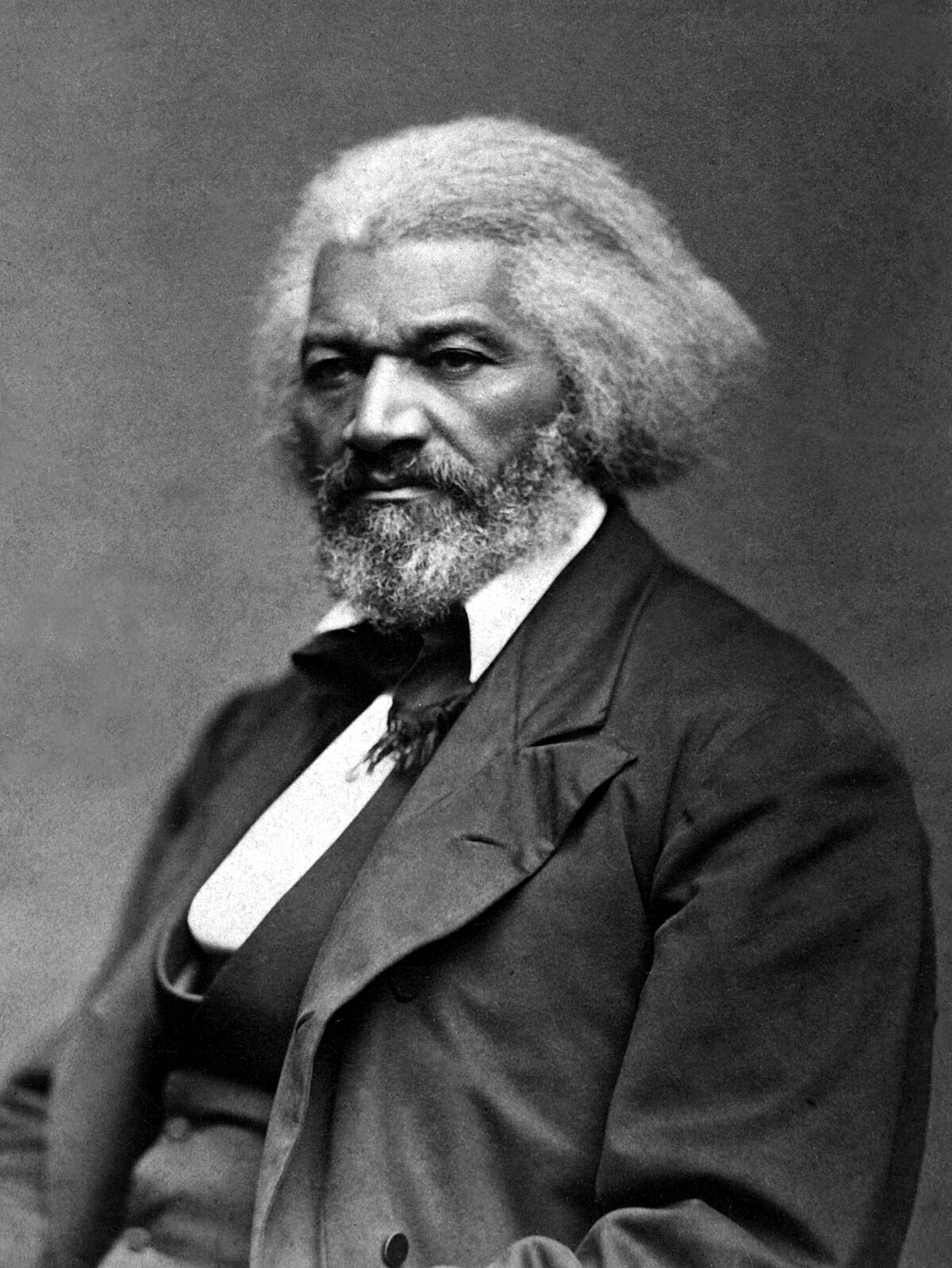
1845 was an influential year in the American literary sphere. In that year, two radically opposing works gained international recognition: The Narrative of Fredrick Douglass and “The Raven.” While this year introduced the greater public to the names of Frederick Douglass and Edgar Allan Poe, neither man would likely consider it the most formative year of their career. In fact, the foundations of both writers’ literary trajectories were laid much earlier, in 1831 in Baltimore, Maryland.i
The two men overlapped their time in Baltimore from 1831 to 1833, occupying the same urban landscape, yet inhabiting profoundly different social realities. During this period, Poe lived with his aunt Maria Clemm and her daughter, Virginia, on Wilks Street. At the beginning of that year, Poe had been court-martialed from West Point and struggled financially. Though the twenty-two-year-old had already published three collections of poetry, it was in Baltimore that he began his literary career, writing and publishing his first short stories, including “A Decided Loss,” “Bon-Bon,” “Metzengerstien,” “The Duc De L’Omelette,” and “A Tale of Jerusalem.”
At the same time, Fred Bailey, as Douglass was known at this time, was enslaved and living with the Auld family on Philpot Street, only a few blocks away. Douglass described this period “as one of the most interesting events of my life…Going to live at Baltimore laid the foundation, and opened the gateway, to all my subsequent prosperity.”ii While laboring in the Auld household, Mrs. Auld began to teach Douglass to read, a catalyst to Douglass’ freedom. Her husband quickly forbade the instruction, fearing that education would encourage ideas of freedom for Douglass who Auld considered his rightful property. Auld‘s prohibition confirmed for Douglass that “education and slavery were incompatible with each other,“iii introducing a path of resistance for that he “at whatever cost of trouble, learn how to read.”iv Douglass set off to achieve his path to freedom by befriending poor white children within the city who taught him to read in exchange for food. At twelve years old, Douglass acquired a copy of “The Columbian Orator,” a collection of speeches and essays from notable figures in history. Douglass was introduced to abolitionist and Enlightenment arguments of human rights. As Douglass recalled, “The more I read, the more I was led to abhor and detest my enslavers.“v Yet, literacy also sharpened his awareness of his bondage, ”It had given me a view of my wretched condition, without the remedy…It opened my eyes to the horrible pit, but to no ladder upon which to get out.”vi
Douglass later learned to write and eventually seized his freedom, publishing his narrative worldwide. He became one of the earliest formerly enslaved authors to “compose his own story and to demonstrate thereby the power of literacy.”vi Through publishing his autobiography, Douglass challenged who could be an author and what could be recorded–especially who could claim authority over the narrative of the country’s injustices. His publication would go on to be a seminal abolitionist text that helped dismantle the institution of slavery.viii
As Douglass began his literary journey, Poe secured his first editorial job at the Southern Literary Messenger. The Messenger published several pro-slavery reviews throughout Poe’s employment, including the infamous Paulding-Drayton review.ix Poe authored several reviews which reflected his strong Southern identity–an identity formed within a slaveholding household in a slave trading city.x
For Douglass, Baltimore was the gateway to literature and, ultimately, freedom; for Poe, it was the city in which his literary ambitions took shape. Both Poe and Douglass later traveled widely, delivering powerful orations of their work. After hearing Douglass speak in Nantucket in 1841, William Lloyd Garrison, founder of The Liberator, recalled “ I shall never forget his first speech at the convention — the extraordinary emotion it excited in my own mind — the powerful impression it created upon a crowded auditory,” This month, The Poe Museum asks you to consider: What power resides in narrative and in the figure who tells it?
For more information on Poe and Douglass, please refer to “Trust No Man: Poe, Douglass, and the Culture of Slavery” in Romancing the Shadow: Poe and Race edited by J. Gerald Kennedy and Liliane Weissberg.
i J. Gerald Kennedy, “Trust No Man: Poe, Douglass, and the Culture of Slavery” in Romancing the Shadow:
Poe and Race, ed. J. Gerald Kennedy and Liliane Weissberg (New York, NY, 2001), 225.
ii Frederick Douglass, Narrative of the Life of Frederick Douglass, an American Slave (1845), 45.
iii Douglass, Narrative of the Life of Frederick Douglass, 56.
iv Douglass, Narrative of the Life of Frederick Douglass, 52.
v Douglass, Narrative of the Life of Frederick Douglass, 58.
vi Douglass, Narrative of the Life of Frederick Douglass, 58.
vii Kennedy, “Trust No Man,” 228.
viii Kennedy, “Trust No Man,” 253.
x For more information on Poe’s reviews see Burton R. Pollin, “January 1836 (Texts),” The Collected Writings of Edgar Allan Poe — Vol. V: SLM (1997), 82-99 and Pollin, “July 1836 (Texts),” The Collected Writings of Edgar Allan Poe, 226-241. The PauldingDrayton review, a controversial pro-slavery review published in the Southern Literary Messenger was also published at this time. Scholars now widely believe the review was
not authored by Poe yet may have been partly edited by him. For more information, see Bernard Rosenthal, “Poe, Slavery, and the ‘Southern Literary Messenger’: A Reexamination,” Poe Studies 7, no. 2 (1974): 29–38; Paul Christian Jones, “Slavery and Abolitionism.” in Edgar Allan Poe in Context, ed. Kevin J. Hayes, (Cambridge University Press, 2012) 138–47; and Terence Whalen, “Average Racism: Poe, Slavery, and the Wages of Literary Nationalism,” in Romancing the Shadow: Poe and Race, ed. J.
Gerald Kennedy and Liliane Weissberg (New York, NY, 2001), 3-35.
xi For more see https://poemuseum.org/understanding-john-allans-slaveholdings/
xii Douglass, Narrative of the Life of Frederick Douglass, 10.