Categories
The Poe Museum Blog

Poe’s Rejection of Transcendentalism in “The Raven”

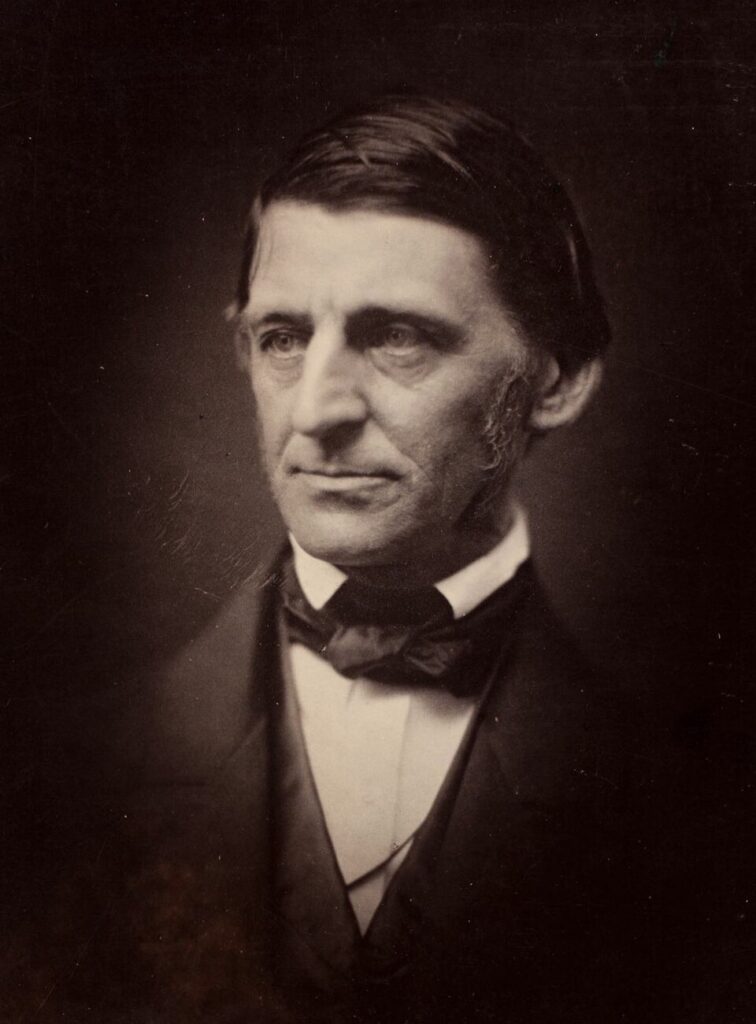
American Transcendentalism was a literary and philosophical movement that emerged from the  New England region of the United States in the 1830s. It was established by Ralph Waldo  Emerson, a writer from Massachusetts, and inspired by eastern spiritualism, European romanticism,  and German idealism, it was a response to the rigid utilitarian and rationalist mentalities of its era. The movement advocated transcendence beyond the rational world of ideas,  knowledge, and arbitrary man-made rules, into the natural, experiential world of instinct,  goodness, and beauty, which exists independently of human structure and value-judgements. 

Philosophically, Transcendentalism emphasized concepts like rugged individualism, freedom,  self-reliance, and simple living. Practically speaking, it was a movement that was only  accessible to a certain class of person: one with enough social-standing, wealth, and  autonomy to be able to retreat to idyllic wilderness retreats, eschew work (and tax-paying), and  object to (or opt out of) the legal and social systems in which they and their countrymen were  mired. Ultimately, it was sufficiently theoretical and drawn from so many oversimplifications  and misreadings of other philosophies that it fell apart quite quickly under scrutiny. Edgar Allan  Poe, among many of his contemporaries, did not care for it. 

Ralph Waldo Emerson

Most of the criticisms at the time revolved around the literary style favored by transcendentalist  authors. It leaned romantic and metaphorical to the point of being, in Poe’s opinion,  nonsensical and empty. He mocked their tendency toward floweriness and sophism in works  like “How to Write a Blackwood Article” (1838), and “Never Bet the Devil Your Head” (1841). In  his essay “The Philosophy of Composition” (1846) he warns against excessively relying on  implication and suggestion to develop your prose, insisting that it’s eventually empty writing if  you refuse to impart any meaning yourself. Essentially, transcendentalist authors preferred a  sort of grandiose and elevated but ultimately empty style of prose. They were repetitive and  self-referential, suggesting broad and fundamental points without ever actually making them. 

Criticisms were also leveraged at the Transcendentalists’ core philosophy. Transcendentalists  considered nature to be inherently good, and as human beings are ultimately part of nature, we  are also intrinsically good. Communing with nature helps us connect with this kind of existential  beauty, and feel more whole and complete with this encompassing Goodness. Anybody who  has read Poe will immediately see that he does not hold this same opinion, often writing about  the intrinsic darkness of human nature. 

Further, “nature never wears a mean appearance” says Emerson in his essay Nature (1836). In  this essay, Emerson argues that the natural world only causes grief to man when they  superimpose their own desires upon it. Suffering is caused not by nature, but by man. 

“The  misery of man appears like childish petulance, when we explore the steady and prodigal  provision that has been made for his support and delight on this green ball which floats him  through the heavens. What angels invented these splendid ornaments, these rich  conveniences, this ocean of air above, this ocean of water beneath, this firmament of earth  between? this zodiac of lights, this tent of dropping clouds, this striped coat of climates, this  fourfold year?” 

There is a lot of bootstrap-sentiment intrinsic to Transcendentalist thinking:  misery and melancholy are things we experience only when we fail to appreciate the world  around us. If we are sad in the face of such a beautiful world, it is because we are not  sufficiently endeavoring to be happy. 

Poe very clearly drew a line here. It’s no mystery that one of his favorite all-time literary themes  was the death of a beautiful woman. Why? Because it’s melancholic! Beauty makes us care,  and melancholy lets us explore our sensitivities and experience catharsis. This loss, the cruel  destruction of something beautiful, makes us sad. Where is the Good in such a loss? How can  it be said that suffering is our own doing and not caused by nature? If man is part of the natural 

world, and nature does not cause misery, where does it come from? If we are plagued with  disease, struggling with infirmity, starving, or freezing, is it really fair to say that suffering has  been inflicted upon us by our own misguided expectations? Can we expect to end our own  misery simply by trying harder to recognize that nature has also given us good things? Just  because nature can be good and beautiful, does it mean that seeing any bad in it is some kind  of human failing? 

“Yet it is certain that the power to produce this delight does not reside in nature, but in man, or  in a harmony of both.” says Emerson. “It is necessary to use these pleasures with great  temperance. For nature is not always tricked in holiday attire, but the same scene which  yesterday breathed perfume and glittered as for the frolic of the nymphs is overspread with  melancholy to-day. Nature always wears the colors of the spirit. To a man laboring under  calamity, the heat of his own fire hath sadness in it.” In other words, delight and melancholy  come from us, not nature. We project them onto nature, not vice versa. It is a Transcendentalist  sentiment that is difficult to digest when disease is decimating your loved ones. 

“The Raven,” by Edgar Allan Poe, was published in 1845. It was Poe’s biggest critical success.  Two years later, in 1847, Poe’s wife Virginia would finally die after slowly being eaten away by  tuberculosis. The progression of the disease was slow and terrible, and would drag on for five years. During this time, Virginia, who was only 19 when she began coughing up blood, wasted  away. It would be inaccurate to say that all her family could do was watch as she suffered,  because there would also be periods when she seemed to recover a bit, and hope would  bloom, just to be dashed several months later. Anybody who has watched a loved one battle  with a deteriorating health condition, especially one where it is uncertain how (or when) things  will end, knows the torment it entails. “The Raven” was such a success because it resonated with  others so strongly. In a time when tuberculosis was the cause of a full quarter of all deaths,  everybody was experiencing this kind of powerlessness and loss.  

“The Raven” is considered by many to be a distinctly anti-Transcendental work. We can see in  “The Raven” that Poe disagrees with the basic Transcendentalist assertion that Nature is itself a  comforting or categorically Good thing. In “The Raven,” he explores its indifference and rigidity.  In the face of tremendous human suffering, Nature offers no comfort. It is merely an immovable  truth. As the poem begins, the narrator is attempting to distract himself from his deep sorrow  at the loss of his love. 

Eagerly I wished the morrow;—vainly I had sought to borrow 
    From my books surcease of sorrow—sorrow for the lost Lenore— 
For the rare and radiant maiden whom the angels name Lenore— 
            Nameless here for evermore. 

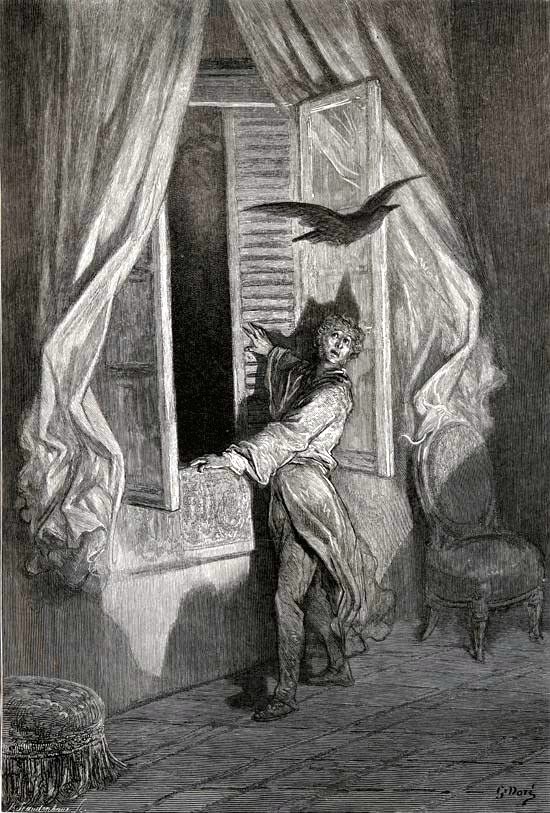
He investigates a sound: the entrance of the titular Raven, a symbolic representation of nature.  He calls out to it, but it gives nothing back. 

    Deep into that darkness peering, long I stood there wondering, fearing,
Doubting, dreaming dreams no mortal ever dared to dream before; 
    But the silence was unbroken, and the stillness gave no token, 
    And the only word there spoken was the whispered word, “Lenore?” 
This I whispered, and an echo murmured back the word, “Lenore!”— 
            Merely this and nothing more. 

Eventually, the raven enters his chamber and perches on a statue of Pallas, the goddess of  wisdom and a representation of the rational self. The raven, it becomes clear, will only speak  the word nevermore: it gives this as its own name, it gives it in response to the narrator muttering to himself (saying that it too, like others who have abandoned him, will leave him  shortly). Despite seeming to understand that this is the only answer the raven will ever give, we  see the narrator struggle. He knows he should not ascribe meaning to the answer, it’s not even  clear that the raven understands what he’s saying at all, but he can’t really help himself. He  asks questions, entreating the spectre to answer, though he knows already what its answer will  be. He still hopes it might be different, and is disappointed when it is not. He is begging Nature  for comfort, for some sign that he will be able to forget this terrible sadness he is experiencing,  some indication that this cruel spectre will leave him, but he is always answered, immovably, in  the same way. 

    “Be that word our sign of parting, bird or fiend!” I shrieked, upstarting

— “Get thee back into the tempest and the Night’s Plutonian shore! 

    Leave no black plume as a token of that lie thy soul hath spoken! 

    Leave my loneliness unbroken!—quit the bust above my door! 

Take thy beak from out my heart, and take thy form from off my door!” 

            Quoth the Raven “Nevermore.” 

And the Raven, never flitting, still is sitting, still is sitting 

On the pallid bust of Pallas just above my chamber door; 

Nature does not leave, it feels no remorse, it offers no empathy. It cannot take pity, it doesn’t  change its mind. We know it is rigid, but we still beg for exceptions. We reason with it, we try to  understand its purpose, but there is none. This isn’t even a conversation. The Raven illustrates  the cold neutrality of nature and shows how humanity suffers within such a context. Maybe  there is beauty in it, maybe it is not morally bad, but it also isn’t some transcendent Goodness.  We can’t simply end our misery by embracing Nature, we can’t comfort ourselves merely by  understanding it. It is cruel to expect ourselves to contextualize our sadness as a failure, or to  see our healing as something to be achieved by a correctly appreciative mindset. Sometimes,  the circumstances of our lives are harsh and unfair. Sometimes, we will suffer and it isn’t our  fault.  

Poe and Emerson lived in a time where the leading causes of death were disease, infection,  and poor sanitation. Infant mortality rates were high, famine was widespread, and most people  lived in extreme poverty. Reality for the everyday person in the 1840s U.S. was fraught with  injustice and hardship. It is no wonder that the Transcendentalist movement, a movement  comprised of white property-owning men, was brief. It relied on a short-sighted kind of  idealism born from reductive misinterpretations of other philosophies, and failed to take into  account the diverse experiences of anybody other than the men who established the  movement. In “The Raven,” Poe captures the broader sentiment of his time, extending empathy  to his contemporaries while dismissing the lofty and disconnected ideals touted by the  Transcendentalists.


Further Reading:

Categories
The Poe Museum Blog

The Life and Death of Sarah Helen Whitman

Written by Kelly White

Today, the Poe Museum celebrates the 148th anniversary of Sarah Helen Whitman’s death.

When a book, movie, or museum focuses on one person, people often assume that person is the most interesting part of the story. Yet, many factors influence who is remembered and who is forgotten. Edgar Allan Poe was brilliant and significant in American literature, but he was one of many talented 19th-century minds. Many others have been overlooked due to race, gender, or social status. This particular remembrance reveals how our collective memory and the literary canon are shaped—not just by talent, but also by prevailing social norms and power structures. 

One way to combat the erasure of people associated with great authors is through specialized programming. The Poe Museum of Richmond, Virginia offers many specialized tours on the life, work, and people that influenced Edgar Allan Poe.  As a part of women’s history month this past March, they offered the Women of Poe Tour, and I was lucky enough to get to experience it. 

It is on this tour that I learned about Sarah Helen Whitman, a poet, scholar, and critic with a truly independent mind, ahead of her time. Her story prompts us to think about who gets remembered, how gender and other biases affect legacy, and why widening our understanding of literary history matters. She loved Poe but knew she could not marry a man lacking self-control. Poe proposed repeatedly, and Whitman finally agreed — but only on one condition. She would only agree if he signed a temperance pledge. She promised him, if he broke it, the engagement would end. One month later, Edgar Allan Poe broke his promise and Whitman ended the engagement. She understood love’s limits and the importance of self-preservation. 

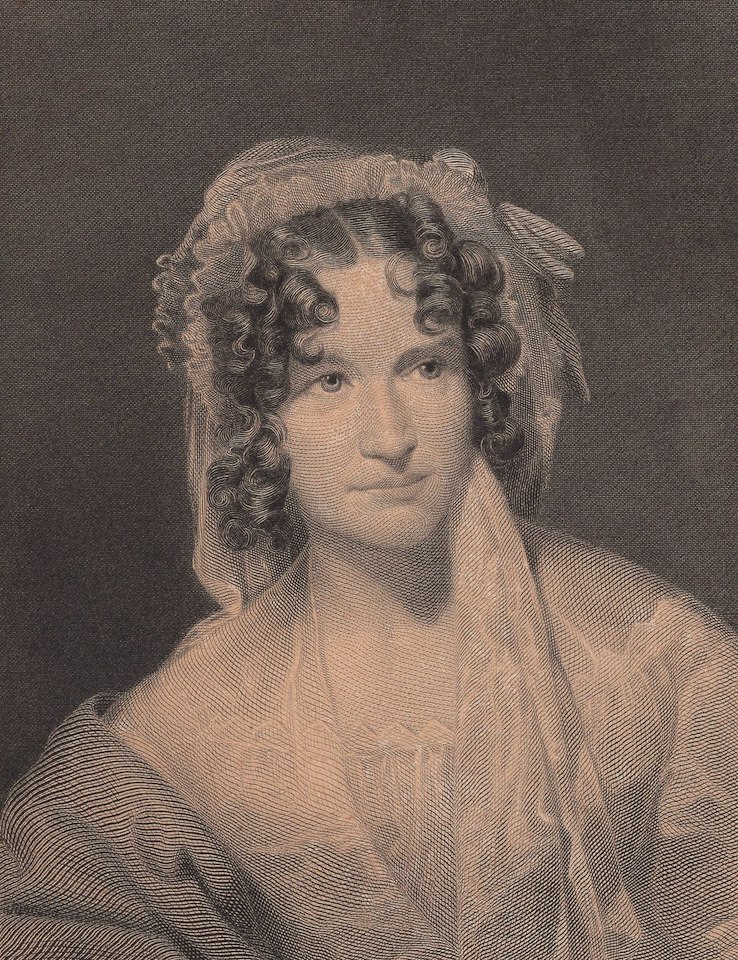
To better understand her decision, it is important to ask: who was this remarkable woman who chose her own safety, future, and peace of mind over her deep love for the troubled Edgar?

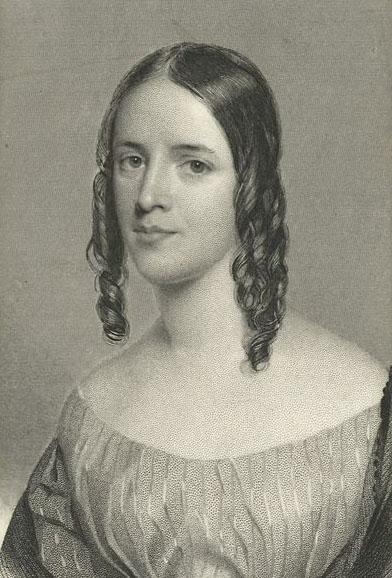
Credit: Brown University Library

Born Sarah Helen Powers to a prominent Rhode Island family on January 19, 1803, Helen was the second child of Nicholas and Anna Powers. Nicholas Powers, her father, was a merchant and sea captain whose business suffered during the War of 1812. After being captured at sea, Nicholas was forced into service in the British Navy, leading the family to incorrectly assume he had died at sea, which increased their financial difficulties. (Power-Whitman Papers, 1997) As a result, Helen moved in with her aunt, whose name is not recorded, on Long Island. There, she first received an education at a Quaker School. This early exposure to Quaker notions of equality and liberal thought may have influenced Helen’s later activism in the Women’s Suffrage movement and her donations to schools for ‘colored children’(historical term; Tucker, 2023) Helen later returned to continue her studies at a private school near her mother, Anna Powers, and her siblings. Unlike her peers, Helen frequently skipped required classes to pursue independent study in the library or outdoors. She read widely, turning to Shakespeare and modern Gothic novels, and also taught herself Italian, French, and German. (Sarah Helen Whitman, 2024) Acquaintances described Helen as having an agile mind and a firm dedication to self-education across a range of topics (Rhode Island Heritage Hall of Fame or RIHHF). These formative experiences, pairing scholarly curiosity with exposure to progressive ideals, would come to shape Helen’s later work as both a writer and an activist, and deeply inform the special perspective she brought to her essays and poetry.

At age twenty-five, during a trip to Boston, Helen met John Winslow Whitman, a lawyer and writer who encouraged her own writing. They married in 1828. Whitman edited several magazines promoting female authors, regularly featuring Helen’s work and reviews. Despite some flaws—he was once arrested for passing a bad check—he supported her ambitions. She may have learned then that love alone wasn’t enough. In 1833, John suddenly died while visiting family, and Helen learned of his death three days later. She returned to her childhood home to live with her mother (Leland, 2026).  

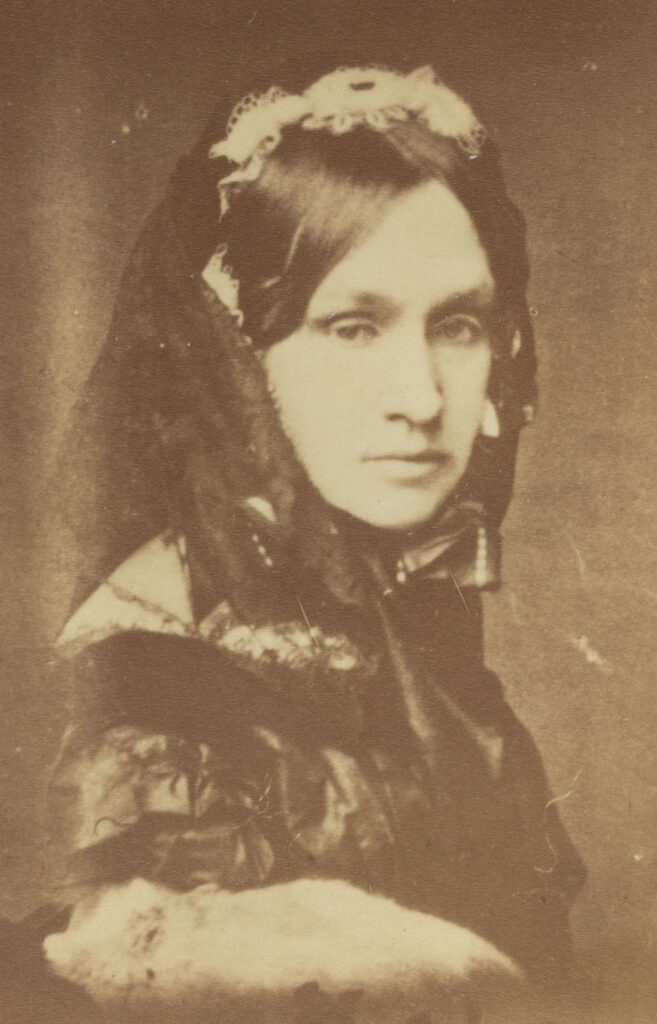
After her husband’s unexpected death, Sarah Helen Whitman turned to the emerging spiritual movement of the time. In an era when death came early and medicine offered little comfort, the movement drew many followers. Helen became a fervent practitioner and would remain one throughout her life, often writing to defend the movement against its detractors (The Poetry Foundation, 2023).

Credit: Brown University Library.

Building on her earlier work, Helen’s writing explored broader topics, including love, death, spiritualism, and women’s suffrage. As a literary critic, “Whitman explicates transcontinental idealism through American perspectives on immortality, pre-Darwinian evolutionary theory, German Naturphilosophen, and the occult in her essays on Emerson, Alcott, Goethe, Shelley, and Poe (Baker 1999).” 

Her understanding of science, theology, and spiritualism allowed her to deepen the reader’s grasp of these works. This led her to become friendly with the writers she critiqued such as Shelley (The Poetry Foundation, 2024). Her essays and poetry attracted Edgar Allan Poe to seek out Whitman. Six years his senior, Whitman bonded with Poe over writing, science, and spiritualism. She was considered a beauty well beyond what society deemed a woman’s prime. Poe told friends he had watched her in her garden, spellbound by her otherworldly beauty. In 1848, she sent Poe an unsigned valentine, later published in the New York Home Journal (RIHHOF).

A low bewildering melody

Is murmuring in my ear —

Tones such as in the twilight wood

The aspen thrills to hear

When Faunus slumbers on the hill

And all the entranced boughs are still.

The jasmine twines her snowy stars

Into a fairer wreath —

The lily through my lattice bars

Exhales a sweeter breath —

And, gazing on Night’s starry cope,

I dwell with “Beauty which is Hope”.

Providence R. I.  August 1848

Poe was smitten, and their flirtatious correspondence began. Poe proposed multiple times, but Whitman refused, perhaps due to her mother’s advice or her own doubts about Poe’s character. Despite her honest affection and intellectual bond with Poe, Whitman struggled with the emotional turmoil his instability caused her. She admired his brilliance, but his erratic behavior foreshadowed doom for any marriage. She was torn between her feelings and her awareness of the risks a deeper relationship with Poe would bring. Poe, desperate, consumed laudanum in an apparent attempt to manipulate her decision, but survived. Helen did not rush to his side, refusing to be moved by his self-destructive behavior. In her letters and actions, it was clear she cared deeply for Poe but was also determined to protect her own well-being, even at great personal cost (eapoe.org).

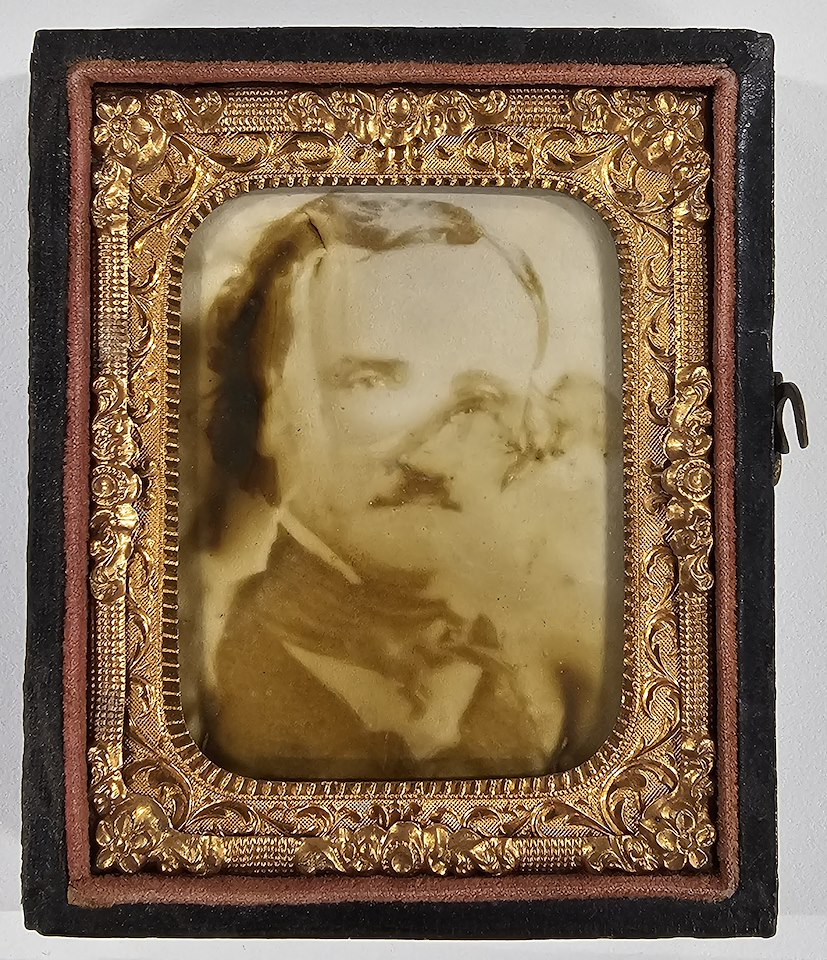
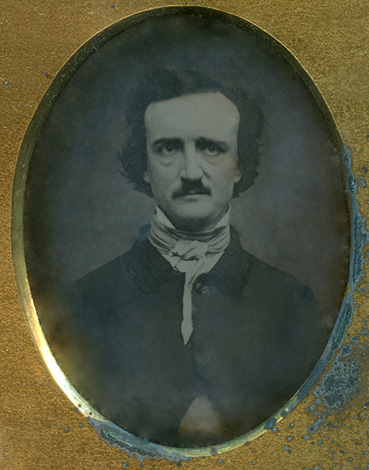
The image is a reversed and cropped copy of the daguerreotype taken on November 13, 1848, in Providence, Rhode Island and which once belonged to Poe’s fiancée Sarah Helen Whitman. Poe Museum Collection, 2020.1.

After this troubling episode, and with much convincing, Sarah Helen Whitman agreed to marry Poe under one condition: he must sign a temperance pledge, and if he broke it, their engagement would be broken. One month later, Helen, while very much in love with Poe, ended their engagement as he could not remain temperate (eapoe.org). This was the moment foreshadowed by everything Helen had lived through — her father’s failures, John’s flaws, Poe’s instability. She had learned, more than once, that love without accountability was not enough.

She did not grow to hate Poe, but even after his untimely end, she would be the friend, scholar, and writer who would challenge Rufus Griswold’s slanderous obituary. In a letter to Griswold, Whitman expressed concern that Maria Poe Clemm — Poe’s aunt and former mother-in-law — was being fed biased information that further damaged his reputation. There were even rumors that the unfavorable gossip came from Helen Whitman herself, which she adamantly denied in the letter. Throughout the letter, she stresses that it is incredibly important that Griswold and Mrs. Clemm know that the dissolution of their engagement was not due to a lack of love but Poe’s inability to stay away from drink. She had believed that Poe wanted to give up drinking and all the ill impacts that it had on his life, but it seems that he lacked the ability or courage to stay temperate. It is painfully obvious that she rejected Poe not only to save herself from heartache but also to protect Poe and his name. She wanted to make it clear that she had felt nothing but love and sadness over their inability to marry, pointing out that Poe blamed her mother for the broken engagement, possibly unable to blame his Helen for her justifiable actions.

Helen’s defense of Poe did not stop at personal correspondence. In 1859, ten years after Poe’s death, Whitman published a rebuttal to Griswold’s negative biography. The preface reads in part:

DR. GRISWOLD’s Memoir of Edgar Poe has been extensively read and circulated; its perverted facts and baseless assumptions have been adopted into every subsequent memoir and notice of the poet, and have been translated into many languages. For ten years this great wrong to the dead has passed unchallenged and unrebuked.

It has been assumed by a recent English critic that “Edgar Poe had no friends.” As an index to a more even-handed and intelligible theory of the idiosyncrasies of his life, and as an earnest protest against the spirit of Dr. Griswold’s unjust memoir, these pages are submitted to his more candid readers and critics by

ONE OF HIS FRIENDS.

Whitman did not stop at publishing her defense. She contacted those who knew Poe, asking for their memories and for the reasons behind Griswold’s attacks on Poe’s legacy. She published Edgar Allan Poe And His Critics in 1860 making her one of the earliest and most rigorous defenders of his literary reputation.

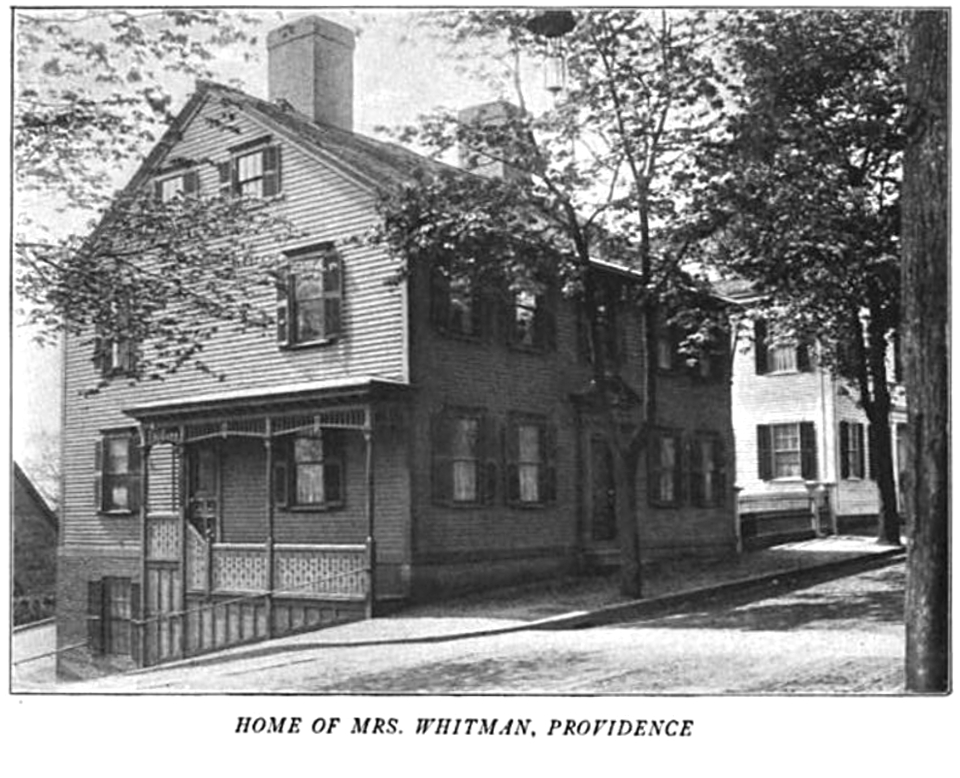
File:Whitman house Providence.jpg

Even as she fought for Poe’s legacy, Sarah Helen Whitman remained steadfast in her convictions. She wrote and published until her death on June 27, 1878, in Providence, Rhode Island. She continued writing, focusing mainly on spiritualism and the occult, and composed poems to her beloved Edgar until the end. She never remarried or had children. After providing for the publication of her final work, she left the rest of her fortune to the Providence Association for the Benefit of Colored Children (RIHHOF).

Whitman was a woman with a great literary mind, a strong will, and a passionate spirit. She turned down a man she loved deeply because she knew the marriage would not work and would be harmful to both of them. Sarah Helen Whitman acknowledged that love was not enough to make a marriage work, or to save a man unwilling to save himself. It did not change how she felt about him, and she came to his defense long after his death, in her final tribute to the man she loved.

Whitman’s story resonates powerfully with present-day conversations about women’s autonomy and the recognition of women’s voices in intellectual spaces. Her willingness to prioritize her own well-being and principles over social expectations parallels continuing struggles for women’s independence in relationships and for fair representation in history and literature. Sarah Helen Whitman and her work deserve to be celebrated on their own terms — not as a footnote in another writer’s story, but as a vital and lasting voice in American literature.

The following is just a sample of Sarah Helen Whitman’s wonderful poetry:

Arcturus

Written in October

“Our star looks through the storm.”

Star of resplendent front! thy glorious eye

Shines on me still from out yon clouded sky—

Shines on me through the horrors of a night

More drear than ever fell o’er day so bright

Shines till the envious Serpent slinks away

And pales and trembles at thy steadfast ray.

Hast thou not stooped from heaven, fair star! to be

So near me in this hour of agony?—

So near—so bright—so glorious, that I seem

To lie entranced as in some wondrous dream—

All earthly joys forgot—all earthly fear

Purged in the light of thy resplendent sphere:

Gazing upon thee, till thy flaming eye

Dilates and kindles through the stormy sky;

While, in its depths withdrawn—far, far away—

I see the dawn of a diviner day.

(1849)


Citations:

Edgar Allan Poe Society of Baltimore – Bookshelf – Death of Edgar A. Poe (R. W. Griswold, 1849). https://www.eapoe.org/papers/misc1827/nyt49100.htm. Accessed 20 Apr. 2026.

Edgar Allan Poe Society of Baltimore – Bookshelf – Edgar Poe and His Critics (S. H. Whitman, 1860). https://www.eapoe.org/papers/misc1851/18600000.htm. Accessed 20 Apr. 2026.

Edgar Allan Poe Society of Baltimore – Bookshelf – The Portraits and Daguerreotypes of Edgar Allan Poe (1989) – Introduction. https://www.eapoe.org/papers/misc1921/deas00ia.htm#dags. Accessed 18 Apr. 2026.

Edgar Allan Poe Society of Baltimore – Bookshelf – The Portraits and Daguerreotypes of Edgar Allan Poe (1989) – Introduction. https://www.eapoe.org/papers/misc1921/deas00ia.htm#dags. Accessed 20 Apr. 2026.

RIAMCO  |  Rhode Island Archival and Manuscript Collections Online. https://www.riamco.org/render?eadid=US-RPB-ms79.11&view=all. Accessed 10 Apr. 2026.

“*Sarah Helen Power Whitman.” Edgar Allan Poe: Rhode Island, 5 Sept. 2018, https://edgarallanpoeri.com/sarah-helen-whitman/.

Sarah Helen (Power) Whitman – Rhode Island Heritage Hall of Fame. https://riheritagehalloffame.com/sarah-whitman/. Accessed 10 Apr. 2026.

“Sarah Helen Whitman.” The Poetry Foundation, https://www.poetryfoundation.org/poets/sarah-helen-whitman. Accessed 10 Apr. 2026.

“Sarah Helen Whitman | Biography | Research Starters | EBSCO Research.” EBSCO, https://www.ebsco.com. Accessed 10 Apr. 2026.

Sarah Helen Whitman | Biography, Books, & Facts | Britannica. 2 Apr. 2026, https://www.britannica.com/biography/Sarah-Helen-Power-Whitman.

Sarah Helen Whitman | Biography, Books, & Facts | Britannica. https://www.britannica.com/topic/Hours-of-Life-and-Other-Poems. Accessed 15 Apr. 2026.

Sarah Helen Whitman as Poet and Critic. https://www.academia.edu/38287046/Sarah_Helen_Whitman_as_Poet_and_Critic. Accessed 15 Apr. 2026.

“Sarah Helen Whitman’s House.” Helen Anthony, https://www.helenanthony.com/bright-lights/sarah-helen-whitmans-house. Accessed 10 Apr. 2026.

Vincent, H. P. “A Sarah Helen Whitman Letter about Edgar Allan Poe.” American Literature, vol. 13, no. 2, 1941, pp. 162–67.

———. “A Sarah Helen Whitman Letter about Edgar Allan Poe.” American Literature, vol. 13, no. 2, 1941, pp. 162–67.

Walton, Geri. “Spiritualism: A Religious Movement of the 1800s.” Geriwalton.Com, 5 July 2021, https://www.geriwalton.com/spiritualism-a-religious-movement-of-the-1800s/.

Writer to Writer, Woman to Woman: The Correspondence of Sarah Helen Whitman and Julia Deane Freeman – ProQuest. https://www.proquest.com/openview/abc0f8ea6e6bb26bb8ebeb32a2be2872/1?pq-origsite=gscholar&cbl=18750&diss=y. Accessed 10 Apr. 2026.

Categories
The Poe Museum Blog

A Monkey’s Paw, a One Wish Willow, and a Little Bit of Poe

Be careful what you wish for seems to be an age old adage, a trope presented in so many different forms of media that it has become cliche. Obsession (2026) offers a fresh take on this idea, wherein the shy, hopeless romantic Bear makes a wish on a magic-store bought oddity, the One Wish Willow, for his friend and longtime crush Nikki to “love [him] more than anything else in the world.” 

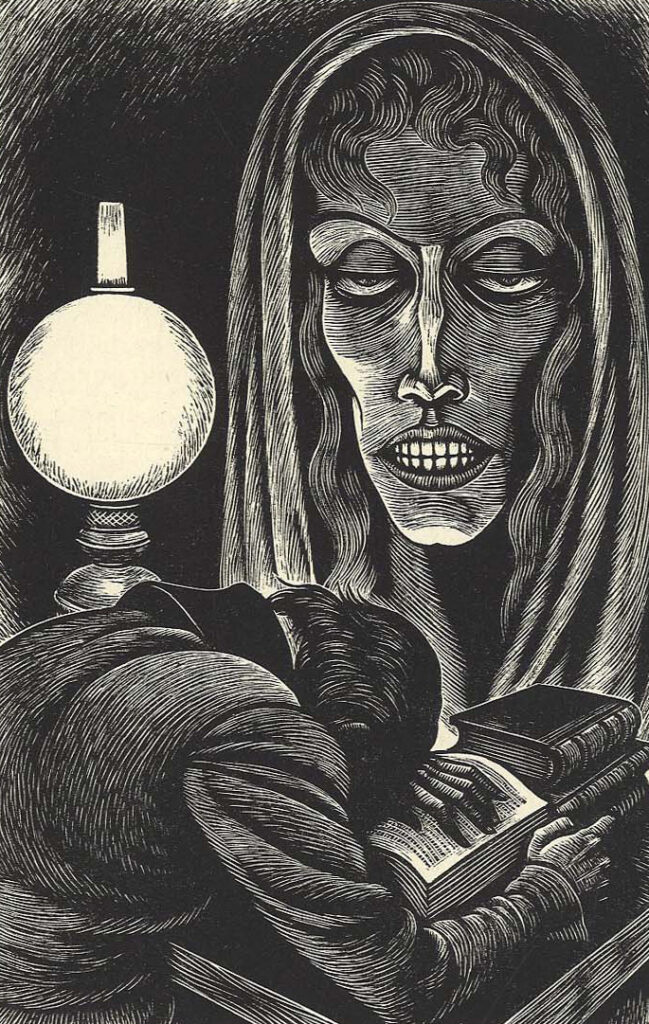
The idea of obsession is a classic trope in gothic fiction and media, especially obsession displayed by male characters over women. Take Edgar Allan Poe’s 1835 short story “Berenice” as an example. Narrator Egaeus uses the phrase monomania to describe the intense fixation he forms over his betrothed cousin Berenice’s teeth. Collins Dictionary defines monomania as “a mental disorder characterized by irrational preoccupation with one subject;” obsession is the first synonym listed.While Egaeus notes that his cousin possesses “gorgeous yet fantastic beauty,” he also insists that he has never loved her romantically. He even goes as far as to admit that he “had seen her — not as the living and breathing Berenice, but as the Berenice of a dream — not as a being of the earth — earthly — but as the abstraction of such a being…” This passage reveals how Egaeus’ monomania over his cousin necessarily dehumanizes her, reducing her to an object of fixation, an abstraction which exists only in his mind, rather than a living, breathing human being. In Obsession (2026), Bear wishes for a version of Nikki who loves him more than anything, a version that henceforth only existed in his mind. His actions in making the wish show that he chose this made-up version of Nikki over the real person, who had her own private thoughts, feelings and the autonomy to choose her own outcomes. When one projects their fantasies onto another, they invent a version of that person that does not exist in reality. They reduce a complex being into an abstract thought. In both “Berenice” and Obsession, this process of abstraction results in a woman’s loss of autonomy when a man forces his desired reality into existence.    

“Berenice” Illustrated by Fritz Eichenberg

One of the most classic stories about wish-making gone wrong is the 1902 short story, “The Monkey’s Paw” by W.W. Jacobs. In this story, Mr. White’s retired friend, Sergeant-Major Morris visits him, his wife, and his son for dinner. While regaling in stories about Morris’ time spent in India, the topic of a monkey’s paw is mentioned. Despite the Whites’ keen interest in the subject, we clearly see Morris’ trepidation in regards to the talisman, which he explains, “had a spell put on it by an old fakir…[who] wanted to show that fate ruled people’s lives, and that those who interfered with it did so to their sorrow…”

Morris then goes on to explain that for anyone who has the paw, three wishes are granted. He tries to destroy the paw right then and there by pitching it into the fire, but Mr. White recovers it and insists on having it, to which Morris reluctantly agrees: so long as White does not fault him for the consequences. We sense the Whites’ desire to laugh the whole thing off – but also their hopefulness that their wishes might be granted, demonstrated by Mr. White’s hasty rescue of the paw from the fire. In each story, the functional purpose of the magical item is almost identical: these objects make wishes come true, but ultimately lead to the doom of the wish-maker and/or those close to them.

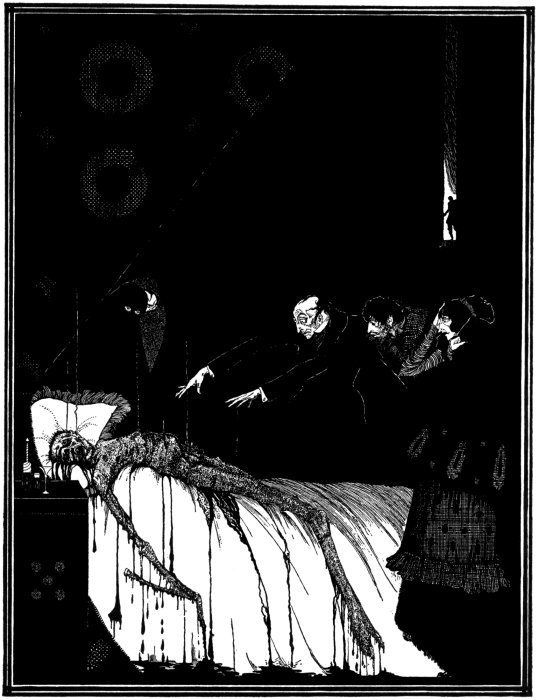
Of course, we also see examples of this trope – consequences of interfering with fate – in Poe’s work. This is likely not a coincidence, as Jacobs was probably inspired by Poe’s writings (Poe died in 1849 and Jacobs was born in 1863). In “The Case of M. Valdemar,” the narrator attempts to prolong the life of his dying friend, M. Valdemar, through mesmerism. He does so by suspending Valdemar in a state of mesmerism right at the moment of his death. Valdemar is preserved in this state of living death, not even breathing. Once the trance is broken, Valdemar instantly dissolves into a puddle of gore and decay. In this story, along with many other Poe stories where the narrator attempts to manipulate life and death (more often in other stories by taking the life of others), he ultimately fails or faces horrifying consequences.  

“The Facts in the Case of M. Valdemar” Illustrated by Harry Clarke

Is this a religious sentiment, not to trifle with the will of God? To the contrary, I would argue that the misfortune in these stories does not come from punishment, but from mere cause and effect. The wishes in these stories are always transactional: they come true, but at a cost. In both stories, the ultimate cost of human life is paid to make the wishes come true. Perhaps the moral here is not a religious one, meant to make us fear and obey God, but rather to not take for granted what we already have in front of us in search for something better. 

While gothic fiction is often rife with supernatural elements, the ghosts and ghouls are rarely what gets under our skin and stays there. What truly scares us is the reality that our actions have consequences, sometimes detrimentally irreversible consequences. As much as we wish we could control fate, we can never do so without changing the course of reality…

This is not to say that we should act as though we have no autonomy over our own lives or outcomes. In fact, the reason we must be careful is that we do have an effect on the world around us. 

One of the most tragic details in “The Monkey’s Paw” is that, before making his wish, Mr. White states, “I don’t know what to wish for…It seems to me I’ve got all I want.” Of course, with his son’s encouragement, he wishes for a mere 200 pounds. The very next day, a man knocks on the Whites door to inform them that their son has perished in a work accident, and that they are to receive 200 pounds in compensation.

Similarly, in Obsession (2026), up until the moment he breaks the One Wish Willow in half to activate his wish, Bear already shares a genuine friendship with Nikki, full of humor and warmth. After he makes the wish, unthinkable horrors ensue.

So, before we go wishing for something to change, we should take a moment to survey what we already have; because, we might already have all we want.


Subscribe to our Substack here!

Categories
The Poe Museum Blog

Discovering Elizabeth Ellet: Fox, Ellet, and Spiritualism of the 19th Century (Part One)

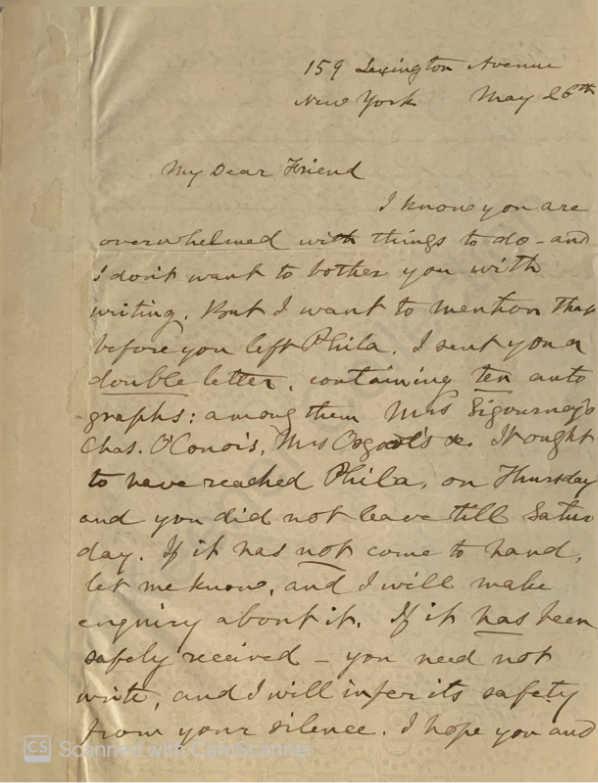
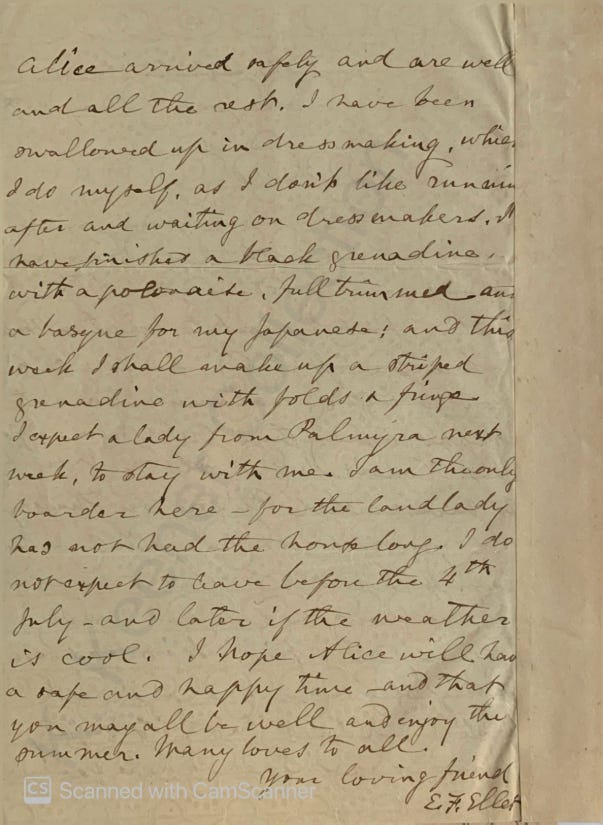
In the fall of 2016, I acquired Elizabeth Fries Ellet’s autograph album. Ellet, a contemporary of Poe’s, was known to the public during her time for her prolific writing, and is best known today for her work The Women of the American Revolution (1849), as well as for being involved in Poe’s life in notorious ways. Her involvement in the Frances Sargent Osgood and Poe affair of 1845-46 usually places her in a negative light, leaving her to seem like a vindictive, gossiping busy-body. It makes one wonder, however, if she truly deserves to be remembered as the woman who allegedly caused Virginia Poe’s death, or if she deserved the treatment Poe paid her in his short story, “Hop-Frog”, where she most likely represents the king character. After all, how could one feel sympathy for Ellet when, according to Poe in a letter written by him to Sarah Helen Whitman dated November 24, 1848, “My poor Virginia was continually tortured…and on her death-bed declared that Mrs. E. had been her murderer” (The Edgar Allan Poe Society of Baltimore). Although it is tempting to only recognize her in the context of Poe, and in negative contexts at that, I believe she deserves to live beyond these small moments for which she is widely remembered. I hope that by sharing some of the letters from her album, I may be able to continue her story beyond the Poe episodes and present her in a sympathetic way.

In this blog post series, I will share and explore a few letters from her album. I will transcribe and provide a scan of the letter, and then discuss the relationship between Ellet and her correspondent, as well as provide historical background context when necessary.

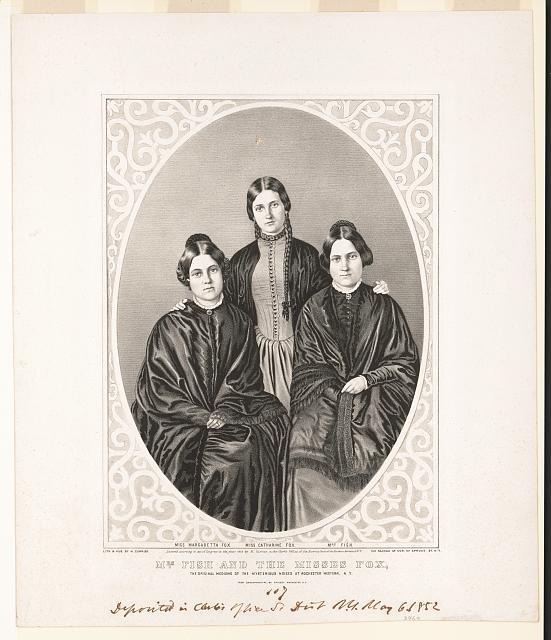
The first letter in this series comes from Margaret F. Kane, who is best known as having been one of the Fox Sisters. These sisters, comprising of Kate, Leah, and Margaret (Maggie) Fox, claimed to have psychic abilities and “proved” their abilities by performing seances. They were ultimately debunked when Margaret, with a heavy conscience, went before the public and announced how she and her sister pulled off the stunts—by producing noises with their knuckles and joints, especially using their toes. She later recanted her statement, but the truth was already out, and she never recovered from the publicity she had brought upon herself. Amidst these circumstances, she especially faced hardship concerning her courtship with a man named Elisha K. Kane, whom she romantically pursued despite his family’s wishes until his death.

The Fox Sisters (Source: https://search.catalog.loc.gov/instances/75ddbb0e-e433-5d82-9801-91308401a861?option=lccn&query=2002710596)

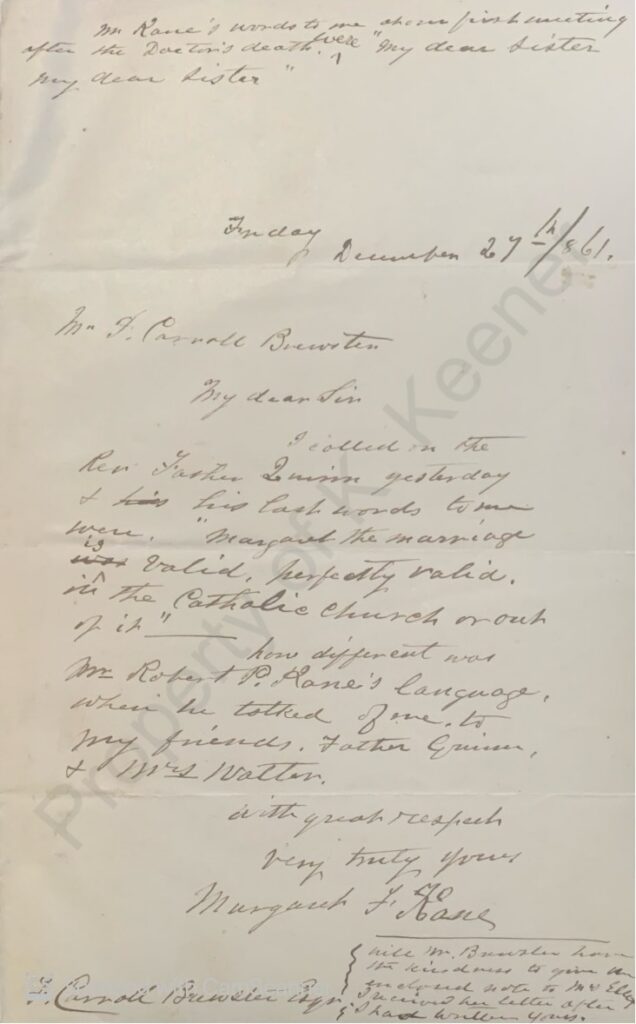
I first want to share the letter that Margaret wrote. It is written to Frederick Carroll Brewster (1825–1898), a Philadelphia lawyer, judge, and the state Attorney General of Philadelphia. The letter, dated December 27, 1861, reads as follows:

Mr. F. Carroll Brewster

My dear Sir

I called on the 

Rev Father Quinn yesterday

+ his his last words to me

were, “Margaret the marriage

is valid, perfectly valid,

in the Catholic church or out

of it”— how different was

Mr Robert P. Kane’s language,

when he talked of me, to 

my friends, Father Quinn,

+ Mrs Watter[?].

With great respect

Very truly yours

Margaret F. Kane

————————————

{ Will Mr. Brewster have

{ the kindness to give this[?]

{ enclosed note to Mrs Ellet

{ I received her letter after

{ I had written yours.

The letter’s contents are of great interest in numerous ways. The first detail I want to point out is the bulk of the letter itself. Out of context, one would be unsure of what she’s talking about. However, it is with thanks to a wonderful and thorough article written about Fox and Kane’s relationship that we are able to shed light on Margaret’s message.

According to Kathy Warnes in her article, “Margaret Fox Kane and Her Victorian Love Story,”  Kane, an Arctic explorer and medical officer, and Fox’s paths crossed in 1852 at a rapping demonstration performed in Philadelphia by Fox and her mother. Elisha “immediately fell in love with Margaret, but according to his letters, not so deeply in love that he thought she was perfect” (Warnes). He sought to refine her, to get her to leave her spirit rapping business, “believing that the three Fox sisters, Leah, Margaret and Kate were committing fraud with their rappings and séances” (Warnes). According to some sources, the two formally married at some point within the four years following their first meeting, while other sources believe Elisha couldn’t bring himself to formally marry her, as this would require him to “defy the objections of his wealthy and prominent Philadelphia family” (Warnes). In her book The Love Life of Dr. Kane, Margaret recalled that Dr. Kane had announced their legal marriage in her third-story apartment, but that their marriage would be kept secret until his return from a book trip in England, when he would then publicly marry her (Warnes). Unfortunately, they never formally married as he died February 16, 1857, in Havana, thus before he could return to the United States.

Now that the background context has been provided, we can understand the letter more clearly. In it, Margaret is insisting the legality of her “marriage” to Kane, citing “Rev. Father Quinn” as the granter or supporter of their union. She is appealing her cause to Brewster, who, at the time, was not yet a judge but most likely a lawyer. Was she friends with Brewster, a client, or imploring her case, hoping by chance that he would further it on her behalf? It is difficult to tell.

Now that the main letter content has been explained, I want to point out the reference to Ellet in the message found in the right-hand corner of the document. Following Elisha’s death, according to Warnes, “In the summer of 1858, Margaret gave her letters to publisher Elizabeth Fries Ellet and Joseph La Fume of the Brooklyn Eagle and they helped her write a narrative to connect the letters.” Warnes continues to explain that Margaret had withdrawn from the project and used the letters as a financial and manipulative bartering tool against Elisha Kane’s family, as she had not been included in his will. After years of back-and-forth bartering in court, Margaret eventually ran dry of funds and was unable to continue pursuing the family, despite having initially won some restitution, and thus the letters were finally published, perhaps out of spite and/or desperation, in The Love Life of Dr. Kane in 1866. 

Although it cannot be proven that Ellet was directly involved with the final published version, given the gap in time between its conception in 1858 and publication in 1866, and as it was published without attribution to an author or editor, it may be assumed. According to David Alexander Chapin, author of “Exploring other worlds: Margaret Fox, Elisha Kane, and the antebellum culture of curiosity,” “correspondence in the Elisha Kent Kane papers and Robert Patterson Kane papers clearly indicate that Ellet prepared it [Fox’s book] and was the driving force behind its publication” (159). 

One other interesting thing to note is that Ellet may have been more closely connected to Fox, and in a way that was beyond Fox’s book, as Ellet was listed as a witness of Margaret’s baptism into the Roman Catholic Church, which occurred in 1858, the same year that the book idea was conceived. The Daily National Democrat, dated September 19, 1858, states, “Miss Margaret Fox, of Rochester-knocking notoriety, was, on Sunday, August 15th, admitted, by the rite of baptism, into the Roman Catholic Church at Saint Peter’s in Barclay street, New York. Horace Greeley and Mrs. Ellet were present as witnesses to the ceremony.”

All of that said, we now have an idea of why Ellet was mentioned in the right-hand corner of Kane’s letter. Margaret wanted to prove the legitimacy of her marriage, and Ellet, who she knew from at least the summer of 1858, was eager to help produce her book. It isn’t surprising that Ellet would step up to the challenge, whether to help a friend, acquaintance, or be involved in some kind of literary pursuit. Not to mention this wasn’t the first time Ellet had stepped up to advocate for a woman she felt had been strongly wronged.*

I leave readers with this last question before closing the first part of this two-parter article: Does this show a sympathetic, philanthropic, and/or friendly side to Ellet, in that she was willing to go to bat for her friend by using her literary talent to produce the book? Let us know!

Stay tuned: In the next part of this two-parter article, I will explore more about the Fox Sisters, spiritualism in the 1840s, and Edgar Allan Poe’s connection to spiritualism.

* For example, see Statement of the Relations of Rufus W. Griswold with Charlotte Meyers (Called Charlotte Griswold), Elizabeth F. Ellet, Ann S. Stephens, Samuel J. Waring, Hamilton R. Searles, and Charles D. Lewis… (1856), which recounts a court case mainly involving Rufus Griswold, his second wife Charlotte Meyers Griswold, and Ellet and Stephens’ support of Charlotte and defamation of Rufus.In this case, according to Joy Bayless in Rufus Wilmot Griswold, “The only person who gained anything by this trial was probably Mrs. Ellet, who had the satisfaction of a belated revenge [against Griswold]…Charlotte certainly gained nothing from the trial. Harriet [Griswold’s third wife], humiliated by the notoriety which the proceedings brought upon her, accepted an invitation of her brother to live in Bangor, leaving Griswold to drag out his one remaining year of life alone (251). It may be argued that Ellet, along with Ann S. Stephens, had precipitated the court case by “working as a self-appointed committee to disturb [Griswold’s] newly acquired domestic peace. Both of them wrote letters to his former wife, Charlotte, telling her that she had been wronged [concerning the legitimacy of her divorce from Rufus] and urging her to have redress” (226).

Categories
The Poe Museum Blog

Twain and Poe

Written by Victoria Meader

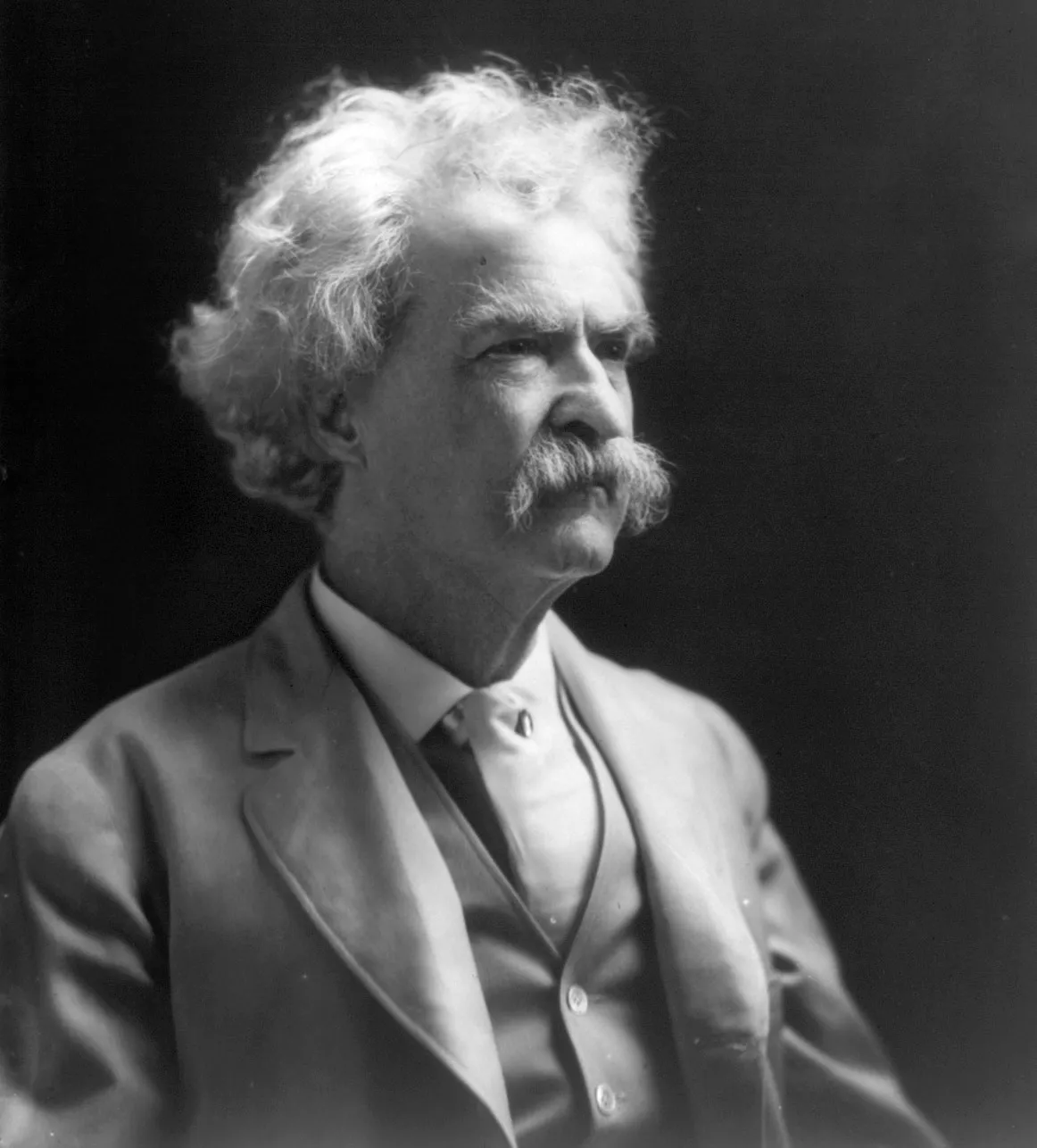
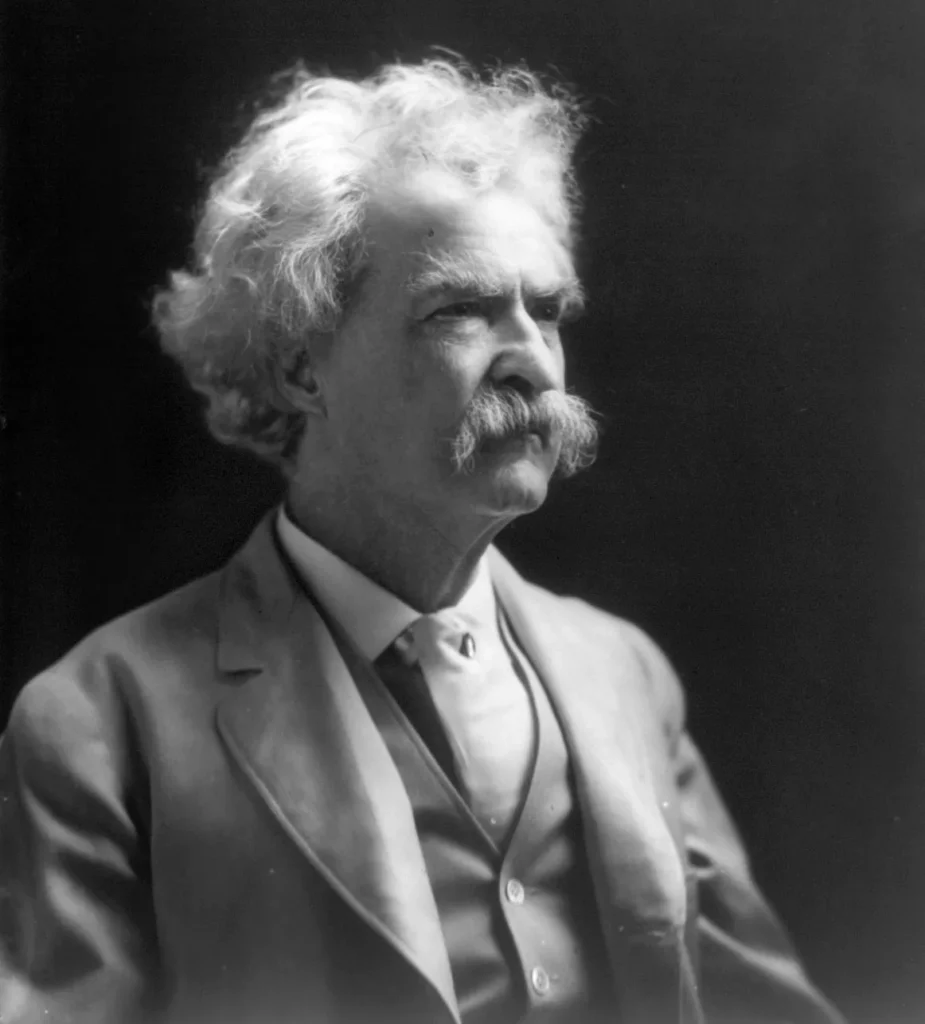
“To me his prose is unreadable—like Jane Austen’s. No, there is a difference. I could read his prose on salary, but not Jane’s. Jane is entirely impossible.”

—Mark Twain about Edgar Allan Poe, in a letter written to friend and author W.D. Howells in January 1909.

It’s relatively well-known that Mark Twain had a pretty low opinion of Edgar Allan Poe (and an even lower opinion of Jane Austen), but why? Let’s examine some key differences between these authors. 

Twain was 13 when Poe died, and Poe was 13 when Austen died. Poe and Twain were both American authors, while Austen was British. Poe and Twain both took literature very seriously, and endeavored throughout their lifetimes to help cultivate the body of American literature. Both of them wanted to see the establishment of a distinctly American literary identity on the world stage, worthy of respect and discourse. 

However, while Twain wrote during the American Civil War and Reconstruction periods of U.S. history, Poe wrote in a much more nebulous period of American history: a vague, expansionist period after the colonial and revolutionary periods but before the Civil War. There was no clearly-established American identity at this point. Instead, the culture was broadly informed by European trends and attitudes. As such, European interests, especially those of Britain, were the overwhelming context by which American art and culture was judged. Even today, many visitors to the Poe Museum in Richmond, Virginia, are surprised to learn that Poe was American at all. His contemporaries, like Longfellow, Irving, and Emerson, are also not always clearly connected to their American roots.

What does it mean, then, to establish a distinctly American literary canon, to each of these men? How would that have been understood? Well, differently, it turns out.

Twain was an author associated with the Realism movement, whose values centered on the faithful and accurate depiction of the everyday lives of ordinary people. To Twain, good American literature was predicated on realistically portraying the lives of average Americans. To this end, Twain is famously associated with a colloquial rhetorical style, in which he uses simple language, dialectical speech, and straightforward grammar to help his (potentially well-educated, potentially wealthy, potentially foreign) readers empathize with his characters, and be immersed in their worlds.

“Well, three or four months run along, and it was well into the winter now. I had been to school most all the time and could spell and read and write just a little, and could say the multiplication table up to six times seven is thirty-five, and I don’t reckon I could ever get any further than that if I was to live forever. I don’t take no stock in mathematics, anyway.”

The Adventures of Huckleberry Finn (1884).

This is an example of a rhetorical device called parataxis: it’s been three or four months, it’s well into winter, I’d been going to school, I can read and write. None of this information is indicated to be any more or less important than the other information surrounding it, it feels more like a series of off-the-cuff observations. Twain pairs this with polysyndeton (an abundance of conjunctions) to connect clauses. This kind of paratactic writing is accessible, and helps put you in the mind of a person without formal education, supporting a sense of empathy with the main character, who may be quite unlike the average reader. This is Twain’s strength: representing the American experience through realism and humanity.

Poe’s approach was different. First of all, to Poe, since there was no clearly distinct American identity yet, he sought validation through competition. If American literature has no clear way to feel separate, it can set itself apart with its quality. Therefore, Poe pushed boundaries and explored various genres, like the relatively new Science Fiction, and the so-new-that-he-had-to-invent-it-himself Detective Fiction. He also endeavored to work within the bounds of what was already popular: like Gothic Fiction and Horror. This is partially what earned him the derision of Realist authors like Howells, he wrote very atmospherically and included a lot of very dark and horrible imagery. He also, in contrast to Twain’s parataxis, used a lot of hypotaxis, a rhetorical device wherein clauses and subclauses and subordinate clauses fit into each other like nesting dolls. It is not a written style that reflects the way people really speak or think, but it does communicate information effectively, and it helps us parse what information is more important than others.

“It was upon a gloomy and tempestuous night of an early autumn, about the close of my fifth year at the school, and immediately after the altercation just mentioned, that, finding every one wrapped in sleep, I arose from bed, and, lamp in hand, stole through a wilderness of narrow passages from my own bedroom to that of my rival.”

—”William Wilson” (1839).

In this passage from Poe’s “William Wilson” (1839), we understand that it was a stormy autumn night on which the narrator rose from his bed and snuck to the bedroom of his rival. That’s the important bit. We also know what year of school this happened in, where it occurred relative to an altercation, that everybody else was asleep, and that the dormitory was maze-like. We don’t focus so much on the possible reality of this information as much as the atmosphere, which was the more important component in Gothic literature. 

This style is much more technically impressive. It generally does not reflect realism or give an accurate impression of even the fanciest of interactions, since people can’t really speak like this (you have to know how your sentence ends before you start it). It can be a bit lofty and exclusionary because of its complexity. However, this hypotactic style was very popular earlier in the century, back when the only people who typically read novels were the upper-class, well-educated, leisure-having elites. Such people as them enjoyed a skillfully arranged sentence, and authors could earn respect with their ability to craft such cleverly structured passages. One author who particularly nailed this technique was Jane Austen.

Austen was not worried about aiding in the establishment of a literary identity, as hers was an already ancient foundation. Novels, in her time, despite being mainly accessible to the elites of society, were also considered low-brow. Reading novels was not seen as a constructive use of time, and was generally condemned as being a sort of idle amusement favored by bored ladies. With this as her medium, Austen was much more interested in exploring the intricate and complex world of social expectation and restraints, especially as they applied to women like her, who were forced to navigate such a lavish yet confining world. She used hypotaxis to humorous effect, artfully relying on tact and subtlety to land indirect blows.

“About thirty years ago Miss Maria Ward, of Huntingdon, with only seven thousand pounds, had the good luck to captivate Sir Thomas Bertram, of Mansfield Park, in the county of Northampton, and to be thereby raised to the rank of a baronet’s lady, with all the comforts and consequences of an handsome house and large income.”

Mansfield Park (1814)

The opening line of Austen’s 1814 book Mansfield Park good-naturedly lets us know that a woman’s position in society was elevated through marriage. We understand from just this one sentence that she started out with relatively little, and ended up in a better position with a nice home and high rank. We see that this is generally a good thing, but are reminded by the use of the word “consequences” that there are hardships involved in this change too, and the overall tone of the sentence reminds us of the powerlessness of women in situations like this, as Miss Ward is a subject to whom these changes are happening rather than an agent bringing about any changes herself. By presenting the information using hypotaxis, though we have to pay more attention to catch all the subtle implications, more information is communicated to us, and it’s done in a fun way that lets us all feel very clever.

It’s easy to see how writing styles changed across the century, and to understand why Twain, a realist who used empathy and accessibility to highlight the down-to-earth American experience, might have felt annoyed with Austen’s writing style. She wrote to an upper-class audience about social constraints they mostly all shared. She wrote in hilarious, complex circles, while Twain wrote in a series of short, straight lines. Their audiences, values, and goals were different. Poe, caught somewhere in the middle, did the best he could in the context of his circumstances. As such, despite feeling that his prose was “unreadable,” Twain did respect Poe.

Twain ends the same letter to Howell by saying, “you grant that God and circumstances sinned against Poe, but you also grant that he sinned against himself—a thing which he couldn’t do and didn’t do.” It seems from this letter that Twain was much more protective of Poe’s legacy than he was of Austen’s, with whom he shared very little in common. He pushed back against his friend for being too dismissive of Poe. Twain, while not being a fan of Poe’s actual work, believed that he was a product of his time and seems to have respected that they both shared and worked hard for the same vision.

Categories
The Poe Museum Blog

Poe’s Irish Ancestry

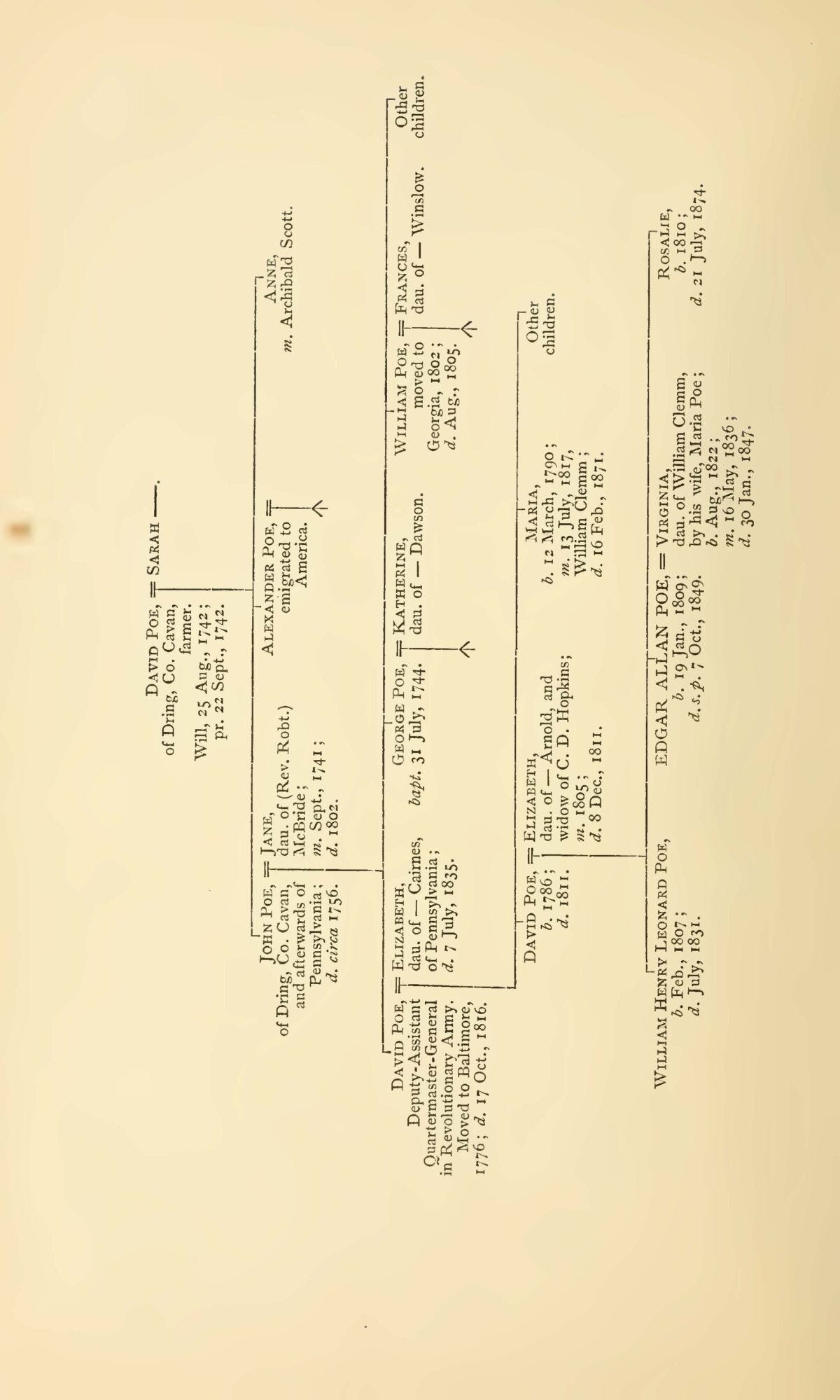
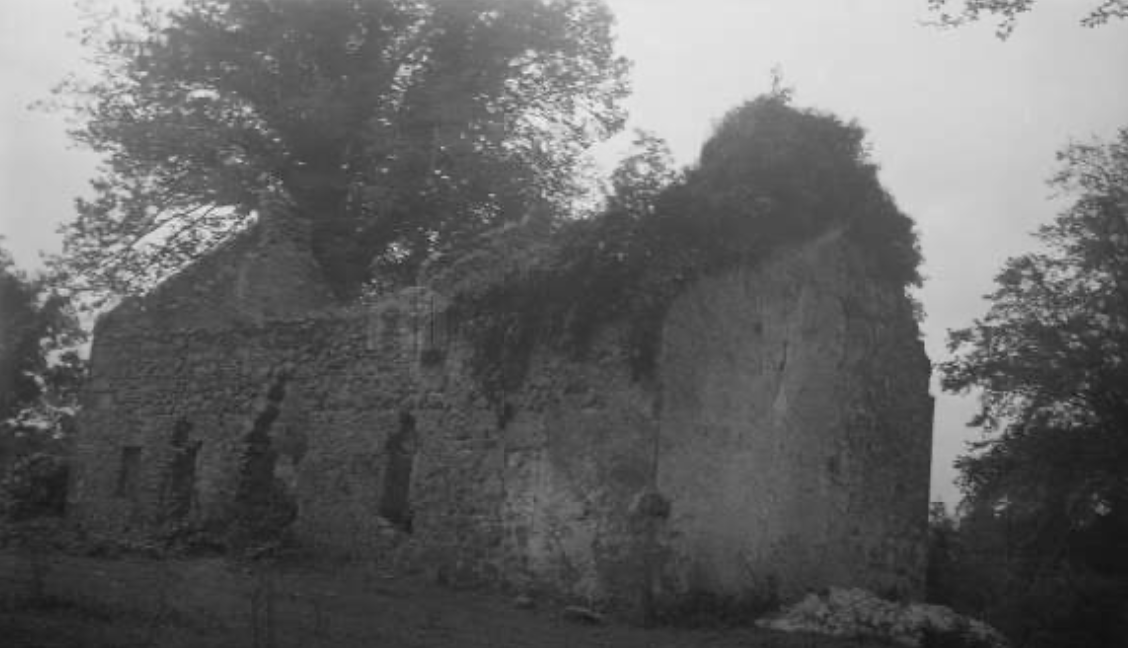
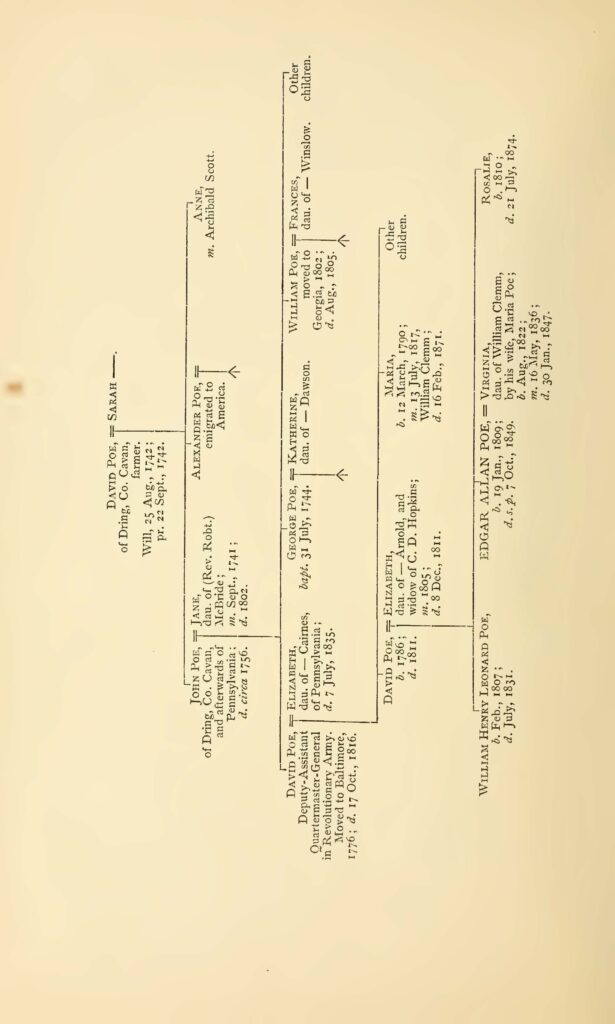
Happy St. Patrick’s Day! Did you know Edgar Allan Poe had Irish ancestry? Edgar’s great-great grandfather, David Poe, is the namesake for Poe’s grandfather and father. David Poe of Dring, in the Parish of Kildallon in County Cavan, lived from around 1645-1742. His will is dated August 25th, 1742 and lists his occupation as a farmer, his wife as Sarah, and his children as John and Alexander. Other documents relating to Poe include the parish’s vestry book where he is referenced as the overseer of the parish roads and includes his signature of ‘David Pooe.’i Poe’s son John and his son David Poe (Edgar’s grandfather) grew up in Ireland until the family immigrated to Pennsylvania and later, Baltimore, Maryland.  

Check out a photograph of the Poe family home in County Cavan through the National Library of Ireland here. 

Poe’s Irish Ancestry. Found in “The origin and early history of the family of Poë or Poe” by Edmund Bewley.
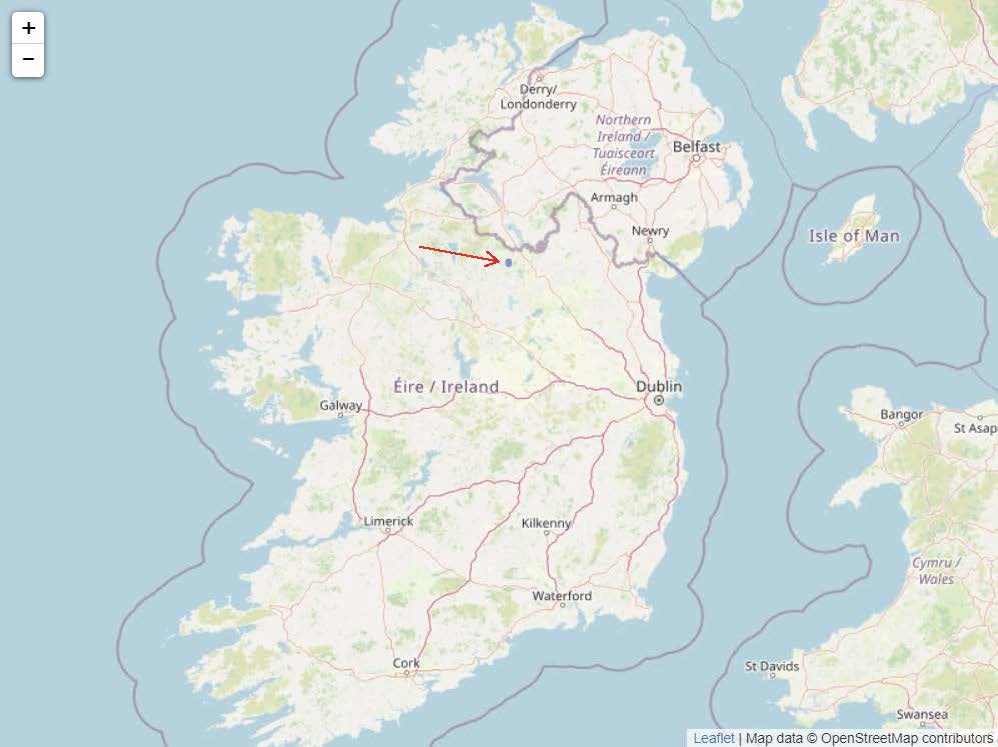
The small blue dot towards the border of Ireland and Northern Ireland represents the townland of Dring where Poe’s family originates.

i Original will amongst the documents from the Consistorial Court of Kilmore, in the Public Record Office, Dublin. Found in Bewley, Edmund T.. “The origin and early history of the family of Poë or Poe” Dublin: Printed for the author by Ponsonby & Gibbs, 1906. 

Categories
The Poe Museum Blog

“Haunt me, then!” From Brontë to Poe

The release of Emerald Fennell’s Wuthering Heights (2026)though not a literal adaptation of Emily Brontë’s masterpiece, has reignited public fascination with her gothic novel. Whether you’ve recently watched the film or read Wuthering Heights (1847), you may find yourself searching for more literature that dwells in themes present in Brontë’s only novel. Edgar Allan Poe, writing across the Atlantic, was within the same nineteenth-century literary milieu as the Brontë sisters. Although it is unknown whether Poe read Wuthering Heights, he famously praised Emily’s sister, Charlotte Brontë, as one of the great literary figures alongside Dumas and Dickens.1 For readers drawn to the atmosphere of Wuthering Heights, the Poe Museum recommends the following four tales written by the “Master of the Macabre”

Illustrations by Fritz Eichenberg of “The Fall of the House of Usher” and “Berenice” by Edgar Allan Poe and Wuthering Heights by Emily Brontë.

If you are intrigued by Catherine’s Haunting of Heathcliff and the Hauntings of the Past 

Catherine Earnshaw, may you not rest as long as I am living; you said I killed you—haunt me, then! The murdered do haunt their murderers, I believe. I know that ghosts have wandered on earth. Be with me always—take any form—drive me mad! only do not leave me in this abyss, where I cannot find you! Oh, God! it is unutterable! I cannot live without my life! I cannot live without my soul!” 

“Ligeia” follows a narrator whose first wife, Ligeia, falls gravely ill and dies. He later marries another woman, whom he does not love, only for her to die as well. When he examines her body, he discovers it has taken on Ligeia’s form, suggesting that she is haunting him from beyond the grave. 

If you’re intrigued by Catherine’s Presence within her Daughter Cathy  

“The little one was always Cathy: it formed to him a distinction from the mother, and yet a connection with her” 

If you’re intrigued by Heathcliff’s Obsession over Catherine and the Control over Female Bodies 

“For what is not connected with her to me? and what does not recall her? I cannot look down to this floor, but her features are shaped in the flags! In every cloud, in every tree—filling the air at night, and caught by glimpses in every object by day—I am surrounded with her image!” 

“Berenice” follows Egæus as he descends into monomania, consumed by an obsessive fixation on his cousin Berenice’s teeth. 

If you’re intrigued by The Gothic Landscape, the Personification of Wuthering Heights, and Destruction of the Earnshaw and Linton Families  

“Wuthering Heights is the name of Mr. Heathcliff’s dwelling. “Wuthering” being a significant provincial adjective, descriptive of the atmospheric tumult to which its station is exposed in stormy weather.” 

“The Fall of the House of Usher” follows an unnamed narrator who visits his childhood friend, Roderick Usher, and Roderick’s sister, Madeline. At the decaying Usher mansion, the narrator witnesses the psychological and physical decline of the family, culminating in Madeline’s death and the ultimate collapse of both the Usher house and lineage. 


1 Edgar Allan Poe, “Marginalia [part XIV],” Southern Literary Messenger, Vol. XV, no. 5, May 1849, 292-296. 

Leave a Reply

Your email address will not be published. Required fields are marked *

Categories
The Poe Museum Blog

200th Anniversary of Poe’s Enrollment at UVA

“Quoth the Raven, ‘Wahoowa!’” 

Today, February 14th, marks the 200th anniversary of Edgar Allan Poe’s enrollment at the University of Virginia. Poe entered the University in 1826 as a part of its second class, appearing 136th  out of 177 students on UVA’s matriculation list.i 

Matriculation Books (University of Virginia) V.1 (1825-1855).

Construction on Virginia’s first public University began in 1817 and was completed in 1825.ii Thomas Jefferson envisioned his new university as an academic community, as he famously declared “[The] University should not be an [sic] house but a village.”iii Poe may have encountered Jefferson on the campus grounds, as Jefferson regularly visited the school from nearby Monticello. On July 4th, 1826, Poe would have learned of the death of the University’s founder in his modern languages class. Upon the news of Jefferson’s passing, the University’s bells tolled for the first time, signaling not only a significant loss for the school but also for the nation. 

At the time of his enrollment, Poe’s relationship with his foster father, John Allan, was strained. Although Allan had recently inherited a substantial fortune from his late uncle, William Galt, he refused to fully finance Poe’s education. In a letter to Allan written in 1831, Poe detailed the financial strain of his university expenses: 

 The expences of the institution at the lowest estimate were $350 per annum. You sent me  there with $110. Of this $50 were to be paid immediately for board — $60 for attendance  upon 2 professors — and you even then did not miss the opportunity of abusing me  because I did not attend 3. Then $15 more were to be paid for room-rent — remember that  all this was to be paid in advance, with $110. — $12 more for a bed — and $12 more for  room furniture.iv 

Despite Allan exhorting Poe to enroll in three classes, Poe enrolled in two: George Long’s class of Ancient Languages (Greek and Latin) and George Blaettermann’s Modern Languages class (French, German, Italian, and Spanish). He attended his ancient languages class on Mondays, Wednesday, and Fridays and modern languages on Tuesday, Thursdays, and Saturdays.v Professor Long, who also instructed Robert Browning, later recalled: 

If Poe was at the University of Virginia in 1826, he was probably in my class which was the  largest. … The beginning of the University of Virginia was very bad. There were some  excellent young men, and some of the worst that ever I knew. … I remember the name of  Poe, but the remembrance is very feeble; and if he was in my class, he could not be among  the worst, and perhaps not among the best or I should certainly remember him.vi 

Poe proved himself an exceptional student, excelling particularly well in his French and Latin exams. He frequented the library often, checking out titles such as Charles Rollin’s Histoire Ancienne and Histoire Romaine; William Robertson, The History of America; Nicholas Gouin Dufief, Nature Displayed in Her Mode of Teaching Language to Man, selected works by Voltaire, and John Marshall’s, The Life of George Washington.vii Poe’s classmates recalled his early literary foundations stating that he “was fond of quoting poetic authors and reading poetic productions of his own”viii Poe also made sure to join extracurriculars, becoming the secretary of the Jefferson Literary Society.ix 

Yet the University of Virginia was far from the studious “village” idealized by its founder. In letters to his foster father, the young scholar described the nascent beginnings of the institution. Disturbances and rowdiness were commonplace from gunfights, stone-throwing skirmishes, students fleeing into the woods to evade authorities, and frequent suspensions and expulsions. One of the first students expelled, James Albert Clarke, had been Poe’s classmate at boarding school.x  

Later in the term, a brawl erupted outside Poe’s dorm. During the fight, Charles Wickcliff bit a chunk of flesh from another student and was promptly expelled.xi Poe himself was involved in a skirmish with classmate Miles George. It is unknown what caused the two to fight in a nearby field, but George later described the altercation as “a mere boyish affair, forgotten as soon as over, leaving no unfriendly or unkind feelings behind.”xii Shortly after the brawl, Poe changed dorms from the western range facing the inner courtyard to the slightly more secluded No. 13 West Range, supposed by another classmate Thomas Goode Tucker to find some solitude.xiii 


Poe’s dorm room at the University of Virginia at 13 West Range.

In his dorm, Poe would often entertain guests; reciting poetry from famous authors and works of his own.xiv One of the earliest stories we know of that Poe wrote, an unpublished and now lost story called “Gaffy,” was read to his college friends. They joked that Poe said the protagonist’s name too often and gave Poe the nickname “Gaffy” Poe.xv 

Allan visited Poe at least once during his time at UVA, and despite their increasingly strained relationship, Poe wrote home frequently with updates on his studies and campus life. Like many of us during our college years, Poe wrote home asking for the essentials “Will you be so good as to send me a copy of the Historiæ of Tacitus — it is a small volume — also some more soap.”xvi He also reported on the campus’ construction ”They have nearly finished the Rotunda — The pillars of the Portico are completed and it greatly improves the appearance of the whole — The books are removed into the library — and we have a very fine collection.”xvii 

Through these updates, however, financial tension simmered between the two. Poe’s debts for what he termed “necessary expenses” accumulated throughout the school year. Allan exacerbated these debts by purchasing mathematics books for Poe, even though he was not enrolled in any math classes, and threatened to remove Poe from institution if he did not accept them. Poe lamented to Allan on being lumped in with other “beggars” at the university. Poe, unlike other students who were “drunk or extravagant”, was alone in the cause financial ruin “because it was my crime to have no one on Earth who cared for me, or loved me”xviii After unsuccessful appeals to Allan and James Galt for money, in a fit of desperation, Poe resorted to gambling, falling deeper into debt.   

Poe took his final examination on December 4th and 5th of that year. His Ancient Languages exam was proctored by future presidents James Madison and James Monroe as well as Joseph Cabell and John Hartwell Cocke. He returned to Richmond shortly before Christmas, expecting a reunion with his fiancée, Elmira Royster, after nine months of silence. Instead, he discovered that she was engaged to another man. Poe had written to Elmira throughout his time in Charlottesville, but her father, disapproving of the engagement, had intercepted the letters, leading Elmira to believe Poe had forgotten her. She soon married Alexander Shelton and would not reconnect with her college love until the end of his life.  

Although Poe’s collegiate experience was far from idyllic, the eleven months he spent in Charlottesville proved formative for his literary development. During this period, he began drafting his earliest short stories, and the Blue Ridge landscape would later inspire the setting of “A Tale of the Ragged Mountains.” Two centuries later, his brief and turbulent year at the University of Virginia stands as a crucial chapter in the formation of one of America’s most enduring literary voices. 

For more sources on Poe’s time spent at UVA, check out recollections from his classmates: 

William Wertenbaker 

Thomas Goode Tucker 

Miles George 

  • Letter to the Richmond State editor – 1880 

William Burwell 

Peter Pindar Pease 


i Matriculation Books (University of Virginia) V.1 (1825-1855).

ii https://www.monticello.org/encyclopedia/timeline-founding-university-virginia
iii Thomas Jefferson to Littleton W. Tazewell, 5 January 1805.
ivEdgar Allan Poe to John Allan — January 3, 1831, https://www.eapoe.org/works/letters/p3101030.htm.
v Dwight R. Thomas and David K. Jackson, “Chapter 02,” The Poe Log (1987), 68.
vi Thomas and Jackson, “Chapter 02,” The Poe Log (1987), 68.
vii Thomas and Jackson, “Chapter 02,” The Poe Log (1987), 67-109. It was possible Poe had encountered Marshall in Richmond. Poe lived within walking distance of Marshall’s home and both men attended services at Monumental Church.
viii Thomas and Jackson, “Chapter 02,” The Poe Log (1987), 69.
ix Thomas and Jackson, “Chapter 02,” The Poe Log (1987), 74.
x Edgar Allan Poe to John Allan — May 25, 1826, https://www.eapoe.org/works/letters/p2605250.htm.
xiEdgar Allan Poe to John Allan — September 21, 1826, https://www.eapoe.org/works/letters/p2609210.htm.
xii Miles George, Richmond State, May 22, 1880. https://www.eapoe.org/papers/misc1851/18800522.htm
xiii Douglass Sherley “Old Oddity Papers — IV,” Virginia University Magazine, April 1880.
https://www.eapoe.org/papers/misc1851/oop18802.htm
xiv Miles George, Richmond State, May 22, 1880. https://www.eapoe.org/papers/misc1851/18800522.htm
xv Douglass Sherley “Old Oddity Papers — IV,” Virginia University Magazine, April 1880. https://www.eapoe.org/papers/misc1851/oop18802.htm
xviEdgar Allan Poe to John Allan — May 25, 1826
xvii https://www.eapoe.org/works/letters/p2609210.htm
xviii Edgar Allan Poe to John Allan — January 3, 1831, https://www.eapoe.org/works/letters/p3101030.htm

Categories
The Poe Museum Blog

Poe and Douglass

1845 was an influential year in the American literary sphere. In that year, two radically opposing works gained international recognition: The Narrative of Fredrick Douglass and “The Raven.” While this year introduced the greater public to the names of Frederick Douglass and Edgar Allan Poe, neither man would likely consider it the most formative year of their career. In fact, the foundations of both writers’ literary trajectories were laid much earlier, in 1831 in Baltimore, Maryland.i  

The two men overlapped their time in Baltimore from 1831 to 1833, occupying the same urban landscape, yet inhabiting profoundly different social realities. During this period, Poe lived with his aunt Maria Clemm and her daughter, Virginia, on Wilks Street. At the beginning of that year, Poe had been court-martialed from West Point and struggled financially. Though the twenty-two-year-old had already published three collections of poetry, it was in Baltimore that he began his literary career, writing and publishing his first short stories, including “A Decided Loss,” “Bon-Bon,” “Metzengerstien,” “The Duc De L’Omelette,” and “A Tale of Jerusalem.” 

At the same time, Fred Bailey, as Douglass was known at this time, was enslaved and living with the Auld family on Philpot Street, only a few blocks away. Douglass described this period “as one of the most interesting events of my life…Going to live at Baltimore laid the foundation, and opened the gateway, to all my subsequent prosperity.”ii While laboring in the Auld household, Mrs. Auld began to teach Douglass to read, a catalyst to Douglass’ freedom. Her husband quickly forbade the instruction, fearing that education would encourage ideas of freedom for Douglass who Auld considered his rightful property. Auld‘s prohibition confirmed for Douglass that “education and slavery were incompatible with each other,“iii introducing a path of resistance for that he “at whatever cost of trouble, learn how to read.”iv Douglass set off to achieve his path to freedom by befriending poor white children within the city who taught him to read in exchange for food. At twelve years old, Douglass acquired a copy of “The Columbian Orator,” a collection of speeches and essays from notable figures in history. Douglass was introduced to abolitionist and Enlightenment arguments of human rights. As Douglass recalled, “The more I read, the more I was led to abhor and detest my enslavers.“v Yet, literacy also sharpened his awareness of his bondage, ”It had given me a view of my wretched condition, without the remedy…It opened my eyes to the horrible pit, but to no ladder upon which to get out.”vi 

Douglass later learned to write and eventually seized his freedom, publishing his narrative worldwide. He became one of the earliest formerly enslaved authors to “compose his own story and to demonstrate thereby the power of literacy.”vi Through publishing his autobiography, Douglass challenged who could be an author and what could be recorded–especially who could claim authority over the narrative of the country’s injustices. His publication would go on to be a seminal abolitionist text that helped dismantle the institution of slavery.viii    

As Douglass began his literary journey, Poe secured his first editorial job at the Southern Literary Messenger. The Messenger published several pro-slavery reviews throughout Poe’s employment, including the infamous Paulding-Drayton review.ix Poe authored several reviews which reflected his strong Southern identity–an identity formed within a slaveholding household in a slave trading city.x 

For Douglass, Baltimore was the gateway to literature and, ultimately, freedom; for Poe, it was the city in which his literary ambitions took shape. Both Poe and Douglass later traveled widely, delivering powerful orations of their work. After hearing Douglass speak in Nantucket in 1841, William Lloyd Garrison, founder of The Liberator, recalled “ I shall never forget his first speech at the convention — the extraordinary emotion it excited in my own mind — the powerful impression it created upon a crowded auditory,” This month, The Poe Museum asks you to consider: What power resides in narrative and in the figure who tells it? 

For more information on Poe and Douglass, please refer to “Trust No Man: Poe, Douglass, and the Culture of Slavery” in Romancing the Shadow: Poe and Race edited by J. Gerald Kennedy and Liliane Weissberg. 


i J. Gerald Kennedy, “Trust No Man: Poe, Douglass, and the Culture of Slavery” in Romancing the Shadow:
Poe and Race, ed. J. Gerald Kennedy and Liliane Weissberg (New York, NY, 2001), 225.
ii Frederick Douglass, Narrative of the Life of Frederick Douglass, an American Slave (1845), 45.
iii Douglass, Narrative of the Life of Frederick Douglass, 56.
iv Douglass, Narrative of the Life of Frederick Douglass, 52.
v Douglass, Narrative of the Life of Frederick Douglass, 58.
vi Douglass, Narrative of the Life of Frederick Douglass, 58.
vii Kennedy, “Trust No Man,” 228.
viii Kennedy, “Trust No Man,” 253.
x For more information on Poe’s reviews see Burton R. Pollin, “January 1836 (Texts),” The Collected Writings of Edgar Allan Poe — Vol. V: SLM (1997), 82-99 and Pollin, “July 1836 (Texts),” The Collected Writings of Edgar Allan Poe, 226-241. The PauldingDrayton review, a controversial pro-slavery review published in the Southern Literary Messenger was also published at this time. Scholars now widely believe the review was
not authored by Poe yet may have been partly edited by him. For more information, see Bernard Rosenthal, “Poe, Slavery, and the ‘Southern Literary Messenger’: A Reexamination,” Poe Studies 7, no. 2 (1974): 29–38; Paul Christian Jones, “Slavery and Abolitionism.” in Edgar Allan Poe in Context, ed. Kevin J. Hayes, (Cambridge University Press, 2012) 138–47; and Terence Whalen, “Average Racism: Poe, Slavery, and the Wages of Literary Nationalism,” in Romancing the Shadow: Poe and Race, ed. J.
Gerald Kennedy and Liliane Weissberg (New York, NY, 2001), 3-35.
xi For more see https://poemuseum.org/understanding-john-allans-slaveholdings/
xii Douglass, Narrative of the Life of Frederick Douglass, 10.

Categories
The Poe Museum Blog

Poe and Frankenstein

Today marks the 208th anniversary of Mary Shelley’s seminal Gothic novel, Frankenstein; or, The Modern Prometheus. For over two centuries, Frankenstein has captivated audiences, whether through the original novel or its many film adaptations. Recently, horror director Guillermo del Toro released the latest adaptation of Shelley’s work, reanimating public interest in this classic piece of gothic literature. What then is Poe’s connection to Frankenstein, and how has he influenced recent film adaptations of her work? 

Mary Shelley’s Frankenstein; or, The Modern Prometheus was published in 1818 when Edgar Allan Poe was nine years old. The novel explores what it means to be ‘Man.’ The complexity of Shelley’s writing is demonstrated through her characters. Victor and his creation exist in a moral grey area—neither wholly good nor wholly evil. Victor’s obsession with creating life is spurred on both by through Enlightenment ideals of scientific progress and by his isolation, yet his hubris leads him to neglect his creation, denying it all humanity. The creature, forced into an isolated life he never chose, struggles for acceptance by Man, and humanity’s rejection of him drives his descent into monstrosity. For both Victor and his creation, the question is asked “What is a man without his humanity?” 

While Poe never commented on the novel, we know it was likely an early gothic influence for the writer. Poe may have first encountered the novel while he was studying abroad in the UK as a young child. One of those who knew Poe later in life recalled “he read such books as…Mary Wollstonecraft’s Frankenstein… some of which works no doubt affected his mental constitution.”1 Scholars like Burton Pollin suggest Poe may have even taken inspiration from another of Shelley’s works, The Last Man,  for his work “The Masque of the Red Death.”2 While Poe wrote directly about Shelley’ literature, he certainly admired that of her husband’s, Percy Bysshe Shelley. Poe praised Shelley’s poetry in reviews at the Southern Literary Messenger and referred to Percy Shelley, John Keats, and Samuel Taylor Coleridge as the “sole poets.”3  

Mary Shelley by Richard Rothwell, oil on canvas, circa 1831-1840.

In their personal lives, both Poe and Mary Shelley had much in common. They both faced devastating losses of loved ones. As he entered adulthood, Poe endured the loss of his mother, brother, best friend’s mother, and his foster mother. Later, at the age of 38, Poe suffered the loss of his wife Virginia.  Likewise, Shelley was similarly well acquainted with grief throughout her life. In the span of seven years, Shelley lost the lives of three of her children, her half-sister, and her husband Percy.  

Both Poe and Shelley also began their literary careers early. Poe was 18 years old when he published his first collection of poetry, Tamerlane. Shelley was the same age when she began writing her debut novel, Frankenstein. In fact, the idea for Frankenstein was created on a summer night with Poe’s literary idol, Lord Byron. During summer of 1816, or “the summer of darkness” as it is commonly known, volcanic ash from an eruption in Indonesia caused the sky over western Europe to become clouded and cold. During this time, Shelley (at this time she was Mary Godwin), Percy Shelley, Byron, and John Polidori (author of “The Vampyre”), traveled to Byron’s Villa Diodati in Lake Geneva, Switzerland, whose frigid landscape provided much of the inspirations for the novel’s gloomy settings. One stormy night at this Villa, Byron proposed that his guests write a ghost story, and Frankenstein was born.  

Both Poe and Shelley drew inspiration from the scientific advancements of their era. Both may have been inspired by one of the earliest electrical experiments conducted by Luigi Galvani in 1780. Poe may have drawn inspiration from Galvani’s work and Shelley’s novel with his own tales of reanimation. In “Some Words with a Mummy,” an ancient Egyptian mummy is reanimated by a group of 19th century doctors. When awoken, the mummy proceeds to criticize the modern world’s technological and scientific shortcomings. Similarly, in “The Man That Was Used Up,” the body of a General ABC Smith is dismembered and is reconstructed daily by his enslaved servant. In The Facts in the Case of M. Valdemar and “The Tale of the Ragged Mountains,” Poe explores themes similar to those Shelley’ novel including Man’s pursuit of forbidden knowledge and the consequential descent into madness. 

Today, many people are introduced to Frankenstein through film adaptations, Halloween costumes, and the popular misnomer of Frankenstein’s monster. This past fall Netflix released, Guillermo del Toro’s adaption of Frankenstein, introducing a new generation to Shelley’s work. Del Toro, director of films such as Hellboy (2004), Pan’s Labyrinth (2006), and Crimson Peak (2015), has consistently reinterpreted the Gothic for the modern age. While his latest work is not a faithful adaptation of Shelley’s masterpiece, it still embodies the overarching themes of her work. Del Toro has praised Shelley’s nuanced approach to her characters, explaining that Shelley “goes deeper than many authors by refusing to impose a pattern of good and evil only as a discourse…but by actually weaving it into the plot.” This he contrasts to Poe’s work, “William Wilson,” which he states keeps its moral tones on the surface.4 In addition to his admiration for Shelley, Del Toro has long celebrated Poe, acknowledging him as a cinematic influence and contributing to the Poe statue in Boston Common.5 

During this cold January, we at the Poe Museum encourage you to read one of the foundational works that not only influenced Poe’s literature but has shaped a whole literary and cinematic gothic genre for over 200 years.  

Categories
The Poe Museum Blog

Celebrating Jane Austen’s 250th Birthday

To me his [Poe’s] prose is unreadable — like Jane Austen’s. No, there is a difference. I could read his prose on salary, but not Jane’s. Jane is entirely impossible. It seems a great pity that they allowed her to die a natural death.

-Mark Twain1 

While Twain would certainly disagree, we at the Poe Museum quite appreciate the literary works of both Poe and Austen. They are regarded as two of the most influential authors of the nineteenth century; though at first, they appear to be many worlds apart. Poe grew up in Richmond, Virginia and spent most of his life writing across several cities on the east coast of the young United States. Austen, while spending some time in Bath, England, preferred the countryside of Steventon and Chawton. Throughout her life Austen published six novels, whereas Poe only published one, The Narrative of Arthur Gordon Pym of Nantucket, along with over 100 short stories and poems such as “The Tell-Tale Heart” and “The Raven.” So, what do these two authors have in common across their distinct literary styles that would connect them in the mind of Mark Twain? 

Throughout their lives, both authors faced financial difficulties and relied on their writing as a means of support. Both published their early works anonymously, Poe publishing his first collection of poems, Tamerlane, “By a Bostonian.” Likewise, all of Austen’s novels published during her lifetime were published anonymously, only after her death with the publication of Persuasion and Northanger Abbey was her identity revealed. Within their literature, both Poe and Austen explored themes of their own worlds through a distinctly satirical and witty style. Coincidentally, while Poe is credited for the invention of the word “epigrammatism,” a letter written by Austen predates Poe usage.  

While Poe and Austen wrote about vastly different subjects, inspired by their different upbringings, they both drew inspiration from similar literary influences: William Shakespeare, Alexander Pope and John Milton. However, one author proved especially influential in shaping the literary works of both writers: Ann Radcliffe. Radcliffe, best known for The Mysteries of Udolpho (1794) was the chief source material in Austen’s gothic parody, Northanger Abbey. The protagonist, Catherine Morland, becomes enthralled with Radcliffe’s novel. However, her fascination with the story leads Catherine to misinterpret her own reality.  

I think you must like Udolpho, if you were to read it; it is so very interesting.

Not I, faith! No, if I read any, it shall be Mrs. Radcliffe’s; her novels are amusing enough; they are worth reading; some fun and nature in them.  

“Udolpho was written by Mrs. Radcliffe,” said Catherine, with some hesitation, from the fear of mortifying him. 

-Chapter 7, Northanger Abbey 

While Udolpho is the dominate gothic story referenced in Northanger, Austen is credited with bringing to light many ‘horrid novels’ that had been forgotten such as Castle of Wolfenbach, Clermont, Mysterious Warnings, Necromancer of the Black Forest, Midnight Bell, Orphan of the Rhine, and Horrid Mysteries. Poe too, was inspired by the works of Radcliffe, even mentioning her by name in his gothic story “The Oval Portrait.”  

THE chateau into which my valet had ventured to make forcible entrance, rather than permit me, in my desperately wounded condition, to pass a night in the open air, was one of those piles of commingled gloom and grandeur which have so long frowned among the Appennines, not less in fact than in the fancy of Mrs. Radcliffe.

-“The Oval Portrait” (1842)

The literary careers of Poe and Austen were cut short when both died young, ages 40 and 41 respectively.  The causes of both of their deaths remain unknown today. Both authors had some of their most well-known works published posthumously, for Poe it was “Annabel Lee” and Austen, Persuasion. After their deaths, both of their lives were mispresented by their first biographers. Poe’s rival, literary executor and eventual biographer, Rufus Griswold, falsely portrayed Poe as a drunk madman in hopes of ruining his reputation. Both of Austen’s early biographers, her brother Henry Thomas Austen with “Biographical Notice” and nephew James Edward Austen-Leigh with “A Memoir of Jane Austen” stripped Austen of her independence and struggles as a writer swapping them for narrative of a quiet, subdued English woman. These early misrepresentations contributed to the creation of both authors’ legacies, eventually rising to pop-culture icons (even if those misrepresentations continue today). Today, Poe’s and Austen’s works have been adapted across stage and screen, influencing modern media and culture of the past 200 years.  


1 Mark Twain [Samuel L. Clemens], letter to W. D. Howells, January 18, 1909. Reprinted in Henry Nash Smith and William M. Gibson, eds., Mark Twain-Howells Letters, Cambridge: Belknap Press of Harvard University Press, 1960, II, p. 841. 

Categories
The Poe Museum Blog

Poe/Krull Writing Contest Winners

Congratulations to the winner of the Poe Museum’s and Hotel Greene’s writing contest: Lee Blanton. Check our Lee’s submission below as well as the submissions from our runner ups!

Winner: The Musings of a Coal Miner

by Lee Blanton

The Witness, The Victim

by Gonjoe Winn

A Friend, A Foe

by Celestine Dawn

The Last Mile Messenger

by Lucas Falzetti

The Mysterious Death of Alice Antonia

by Alice Antonia