
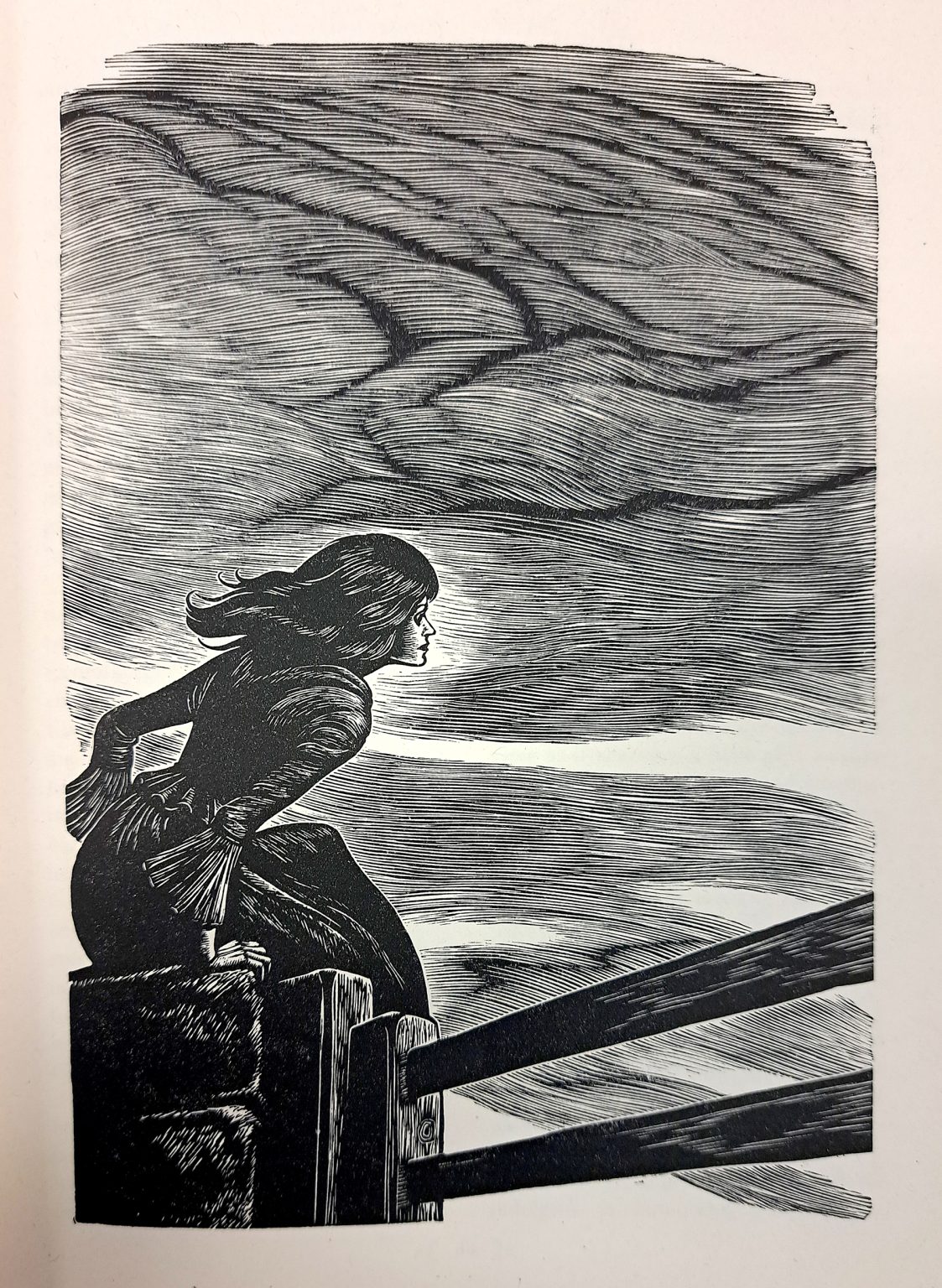
The release of Emerald Fennell’s Wuthering Heights (2026), though not a literal adaptation of Emily Brontë’s masterpiece, has reignited public fascination with her gothic novel. Whether you’ve recently watched the film or read Wuthering Heights (1847), you may find yourself searching for more literature that dwells in themes present in Brontë’s only novel. Edgar Allan Poe, writing across the Atlantic, was within the same nineteenth-century literary milieu as the Brontë sisters. Although it is unknown whether Poe read Wuthering Heights, he famously praised Emily’s sister, Charlotte Brontë, as one of the great literary figures alongside Dumas and Dickens.1 For readers drawn to the atmosphere of Wuthering Heights, the Poe Museum recommends the following four tales written by the “Master of the Macabre”
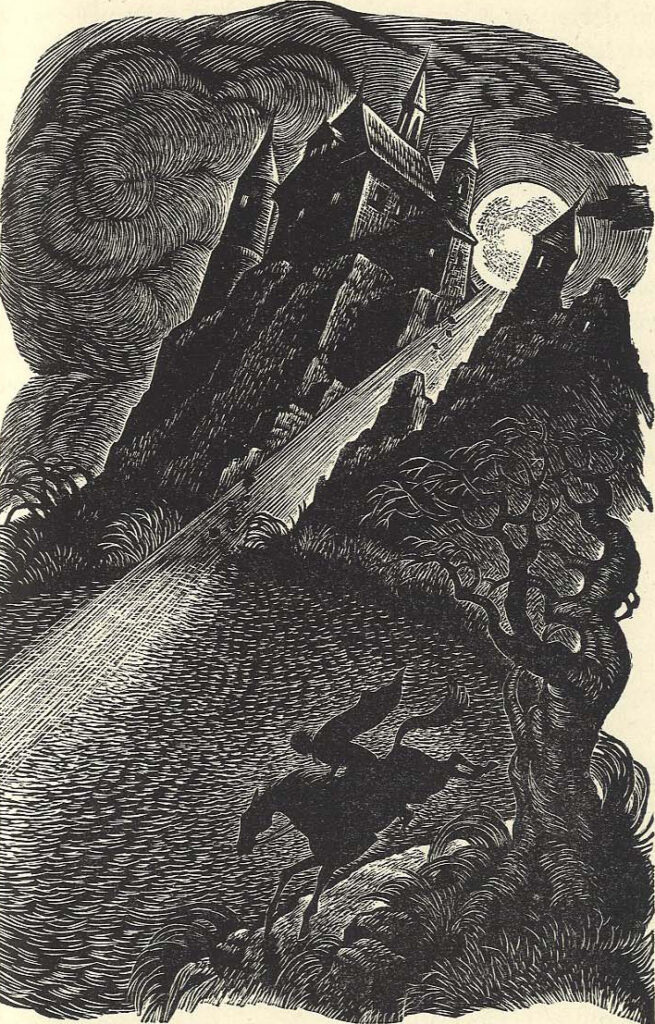
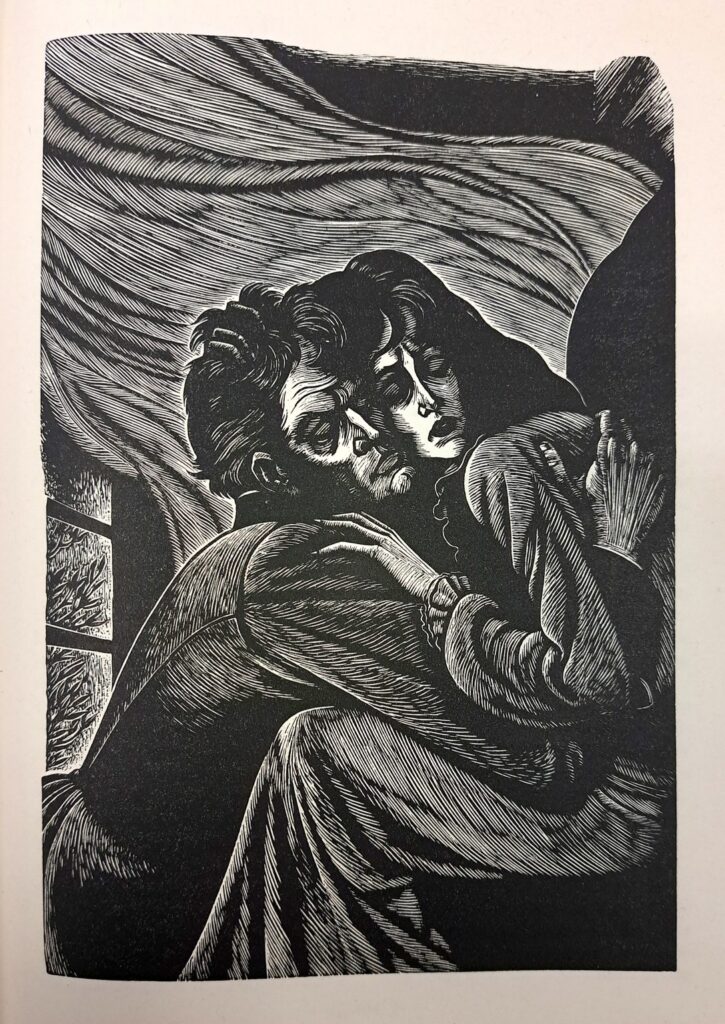
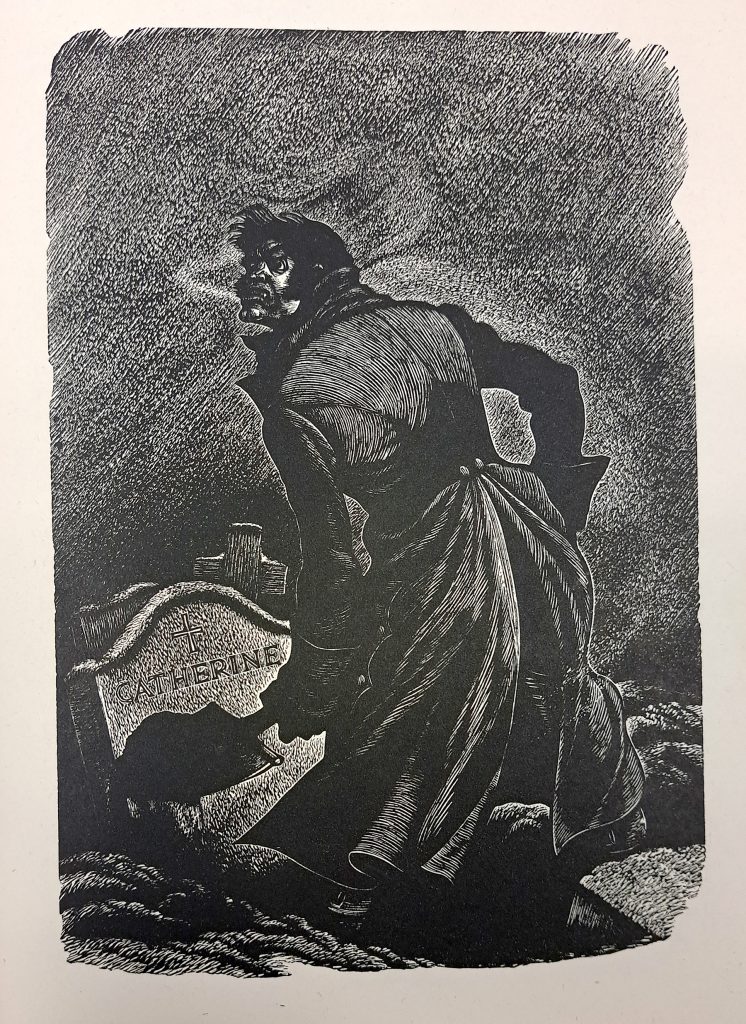
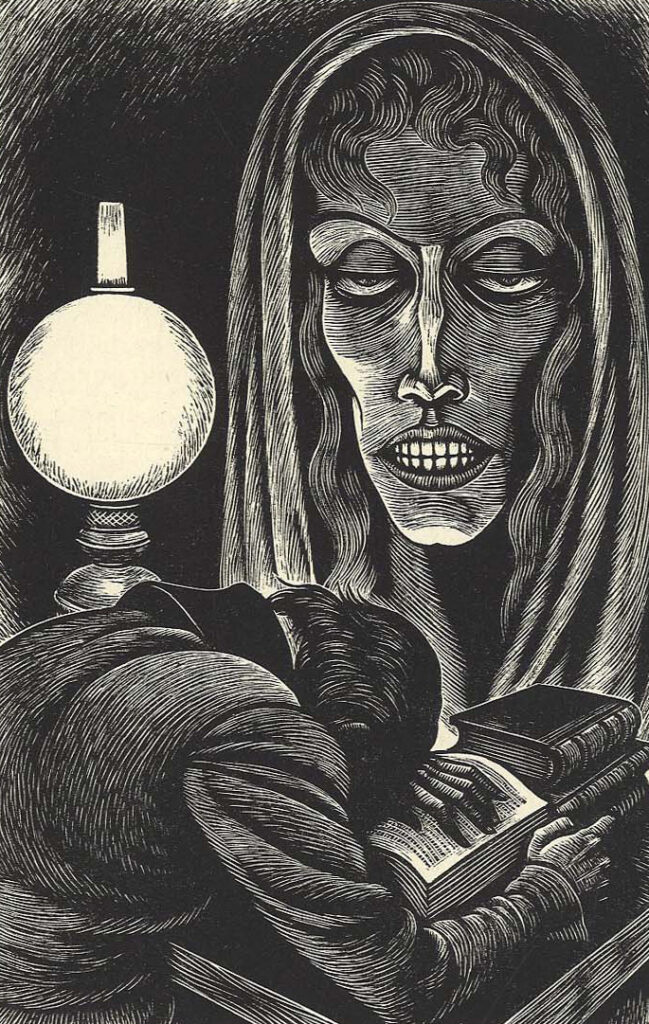
Illustrations by Fritz Eichenberg of “The Fall of the House of Usher” and “Berenice” by Edgar Allan Poe and Wuthering Heights by Emily Brontë.
If you are intrigued by Catherine’s Haunting of Heathcliff and the Hauntings of the Past
Then you might enjoy “Ligeia” (1838)
“Catherine Earnshaw, may you not rest as long as I am living; you said I killed you—haunt me, then! The murdered do haunt their murderers, I believe. I know that ghosts have wandered on earth. Be with me always—take any form—drive me mad! only do not leave me in this abyss, where I cannot find you! Oh, God! it is unutterable! I cannot live without my life! I cannot live without my soul!”
“Ligeia” follows a narrator whose first wife, Ligeia, falls gravely ill and dies. He later marries another woman, whom he does not love, only for her to die as well. When he examines her body, he discovers it has taken on Ligeia’s form, suggesting that she is haunting him from beyond the grave.
If you’re intrigued by Catherine’s Presence within her Daughter Cathy
Then you might enjoy “Morella” (1835)
“The little one was always Cathy: it formed to him a distinction from the mother, and yet a connection with her”
After marrying Morella, our unnamed narrator becomes increasingly unsettled by her presence and intellect. When Morella dies in childbirth, he takes comfort in their daughter, whom he feels compelled to name Morella. Morella soon begins to resemble her mother’s appearance, fearing that she may be Morella reborn.
If you’re intrigued by Heathcliff’s Obsession over Catherine and the Control over Female Bodies
Then you might enjoy “Berenice” (1835)
“For what is not connected with her to me? and what does not recall her? I cannot look down to this floor, but her features are shaped in the flags! In every cloud, in every tree—filling the air at night, and caught by glimpses in every object by day—I am surrounded with her image!”
“Berenice” follows Egæus as he descends into monomania, consumed by an obsessive fixation on his cousin Berenice’s teeth.
If you’re intrigued by The Gothic Landscape, the Personification of Wuthering Heights, and Destruction of the Earnshaw and Linton Families
Then you might enjoy “The Fall of the House of Usher” (1839)
“Wuthering Heights is the name of Mr. Heathcliff’s dwelling. “Wuthering” being a significant provincial adjective, descriptive of the atmospheric tumult to which its station is exposed in stormy weather.”
“The Fall of the House of Usher” follows an unnamed narrator who visits his childhood friend, Roderick Usher, and Roderick’s sister, Madeline. At the decaying Usher mansion, the narrator witnesses the psychological and physical decline of the family, culminating in Madeline’s death and the ultimate collapse of both the Usher house and lineage.
1 Edgar Allan Poe, “Marginalia [part XIV],” Southern Literary Messenger, Vol. XV, no. 5, May 1849, 292-296.