
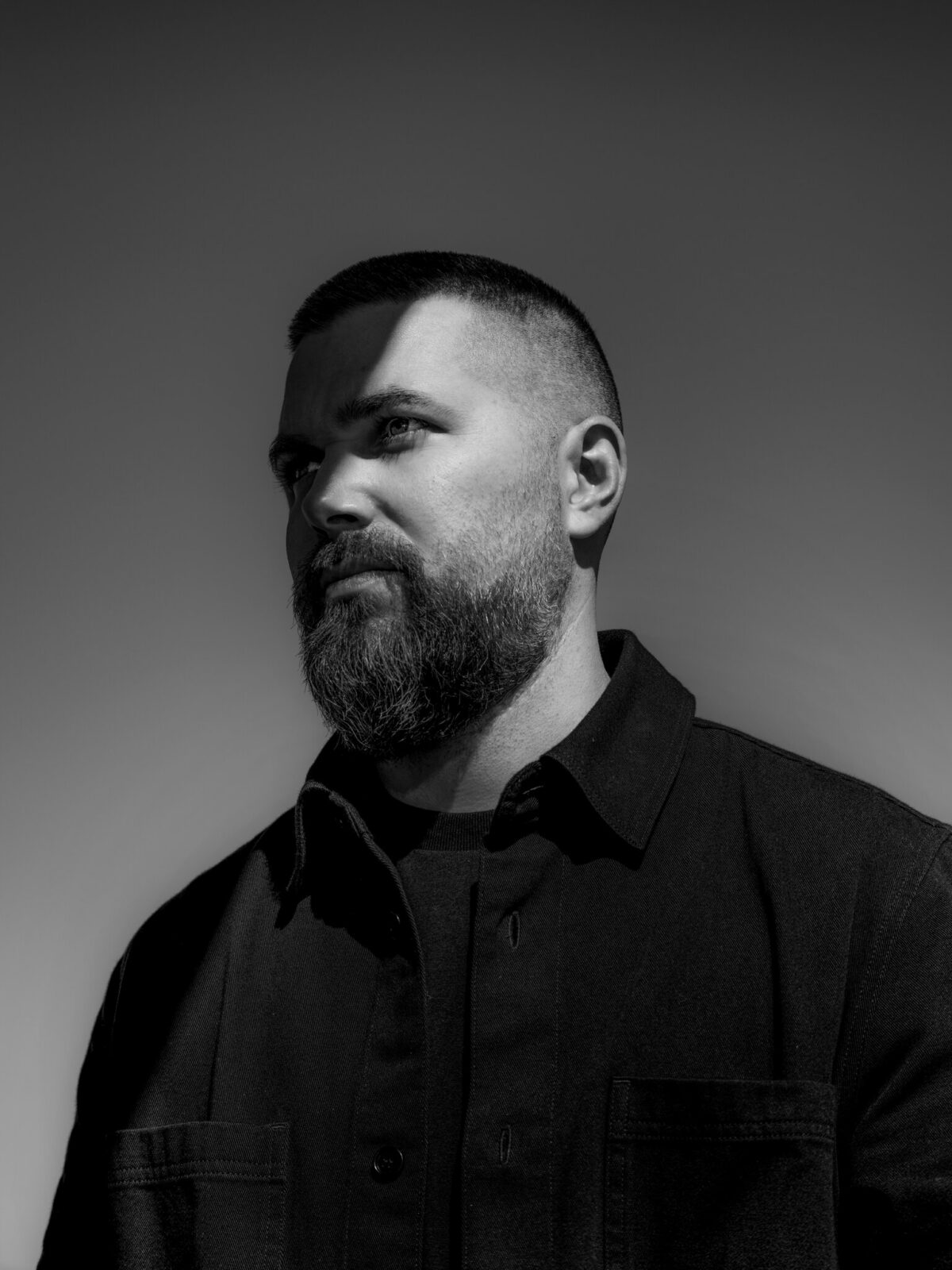
“Southern gothic is something very different, much more romantic. I think that romanticism is what’s different. Poe walked the line between both things, having spent time in the South and the North and having gone to boarding school in England. He gets to incorporate everything.”1
-Robert Eggers (2019)
Robert Eggers has emerged as one of the most notable horror filmmakers of the past decade and is set to release his fifth feature-length film, Werwulf in December 2026. Known for his distinct style of psychological terror and historical authenticity, Eggers has written and directed four feature films thus far including The VVitch (2015), The Lighthouse (2019), The Northman (2022), and most recently, Nosferatu (2024). While there’s no doubt that Eggers is inspired by the Gothic genre, how might he and his films be connected to Edgar Allan Poe?
Eggers has long been a fan of Edgar Allan Poe. He and his director of photography, Jarin Blaschke, first bonded over Poe in their early twenties. In fact, it was Blaschke who gifted Eggers one of his most prized possessions—a 1923 edition of Edgar Allan Poe’s Tales of Mystery and Imagination, illustrated by Harry Clarke. “It’s something that I have coveted for a long time,” Eggers says, “and, obviously, I like Edgar Allan Poe.” Eggers reportedly keeps the book on a prominent bookshelf in the dining area of his London flat. He specifically drew inspiration from its moody, gothic atmosphere for Nosferatu.2
Eggers stands apart from most contemporary filmmakers in his deep understanding of Poe’s ethos. Like Poe, Eggers heavily relies on psychological horror to reflect the universal fear present throughout time and space. In response to comments that his debut film The VVitch was not a horror film but rather a supernatural psychological suspense thriller, he said, “‘O.K., that’s cool.’ But then […] Edgar Allan Poe isn’t horror, either. What’s important to me about horror stories, […] is to look at what’s actually horrifying about humanity, instead of shining a flashlight on it and running away giggling.”3 This is perhaps best exemplified in one of Eggers’ short films, an adaptation of “The Tell-Tale Heart”.
Eggers’ second feature film, The Lighthouse, was loosely inspired by Edgar Allan Poe’s story of the same name but ultimately, Eggers decided to take the film in a new direction (read Poe’s unfinished manuscript for “The Lighthouse”).
His most recent film, Nosferatu, adapts the Gothic genre again, this time a remake of Nosferatu (1922), an unlicensed adaptation of Bram Stoker’s Dracula. While Dracula (1897) was published after Poe’s death in 1849, Poe was likely familiar with two of the earliest vampire stories. Lord Byron’s “A Fragment” (1816) and John Polidori’s “The Vampyre” (1819) were published during Poe’s childhood. Polidori, Byron’s personal physician, first conjured the idea of “The Vampyre” during Byron’s famous ghost story contest hosted in the summer of 1816 in his summer estate, Villa Diodati. It was here that another friend of Polidori and Byron, Mary Wollstonecraft Godwin (later known as Mary Shelley) wrote the concept of her original story, Frankenstein; or, The Modern Prometheus. While Poe himself never wrote a vampire story, he certainly explored their central motif: the death of a beautiful woman. The deaths “Ligeia,” “Morella,” and “Berenice” all capture what Poe deemed “the most poetical topic in the world.”4 Likewise, Eggers, in his take on the classic vampire story, takes a note from Poe’s book, portraying the vampire as a manifestation of grief and longing.
If you’re looking forward to Eggers’ latest film this winter, then why not revisit a story from one of his greatest sources of inspiration?
1 Robert Eggers, interview by Jacob Hall, Slashfilm.com, November 8th, 2019
https://www.slashfilm.com/570336/robert-eggers-interview/
2 Robbert Eggers, interview by Carrie Wittmer, December 18th, 2024, L’Officiel,
https://www.lofficielusa.com/film-tv/nosferatu-director-robert-eggers-movie-interview
3 Robert Eggers, interview by Vinnie Mancuso, Observer, February 25th, 2016.
https://observer.com/2016/02/robert-eggers-director-of-the-witch-on-the-horror-right-in-front-of-us
4Edgar Allan Poe, “The Philosophy of Composition” (Text-02), Graham’s Magazine, vol. XXVIII, no. 4, April
1846, 28:163-167