Written by Kelly White
Most people see death as the final act in the story; once you shuffle off this mortal coil, there is nothing left to tell. This isn’t true; burial and the practices around death can offer interesting insight into an individual’s life and death. It can also reveal the family, their cultural background, and their societal position. What can we learn from Poe’s burial, and how does his family’s history potentially influence the burial?
Edgar Allan Poe died in Baltimore, Maryland, on October 7, 1849, after mysterious circumstances brought him, hallucinating, to a nearby hospital, where he would succumb to his illness. Poe would be buried with his family in Lot 27 of Westminster Hall and Burying Ground. Famously, Edgar Allan Poe was buried without a headstone or grave marker, and many believe this was because of his money issues and his family’s refusal to pay for one. What if there was something more to it than just a lack of economic stability? What if it was a cultural and religious practice that was observed by the Poes, not because of their current hardship, but because of hardship that was experienced by previous generations? By looking at the history of Lot 27 and the cultural practices of the Ulster Scots in the 17th and 18th centuries, we see a different story emerge. A story about religious oppression in 1600s Ireland, financial restraints, and how hardship becomes tradition.
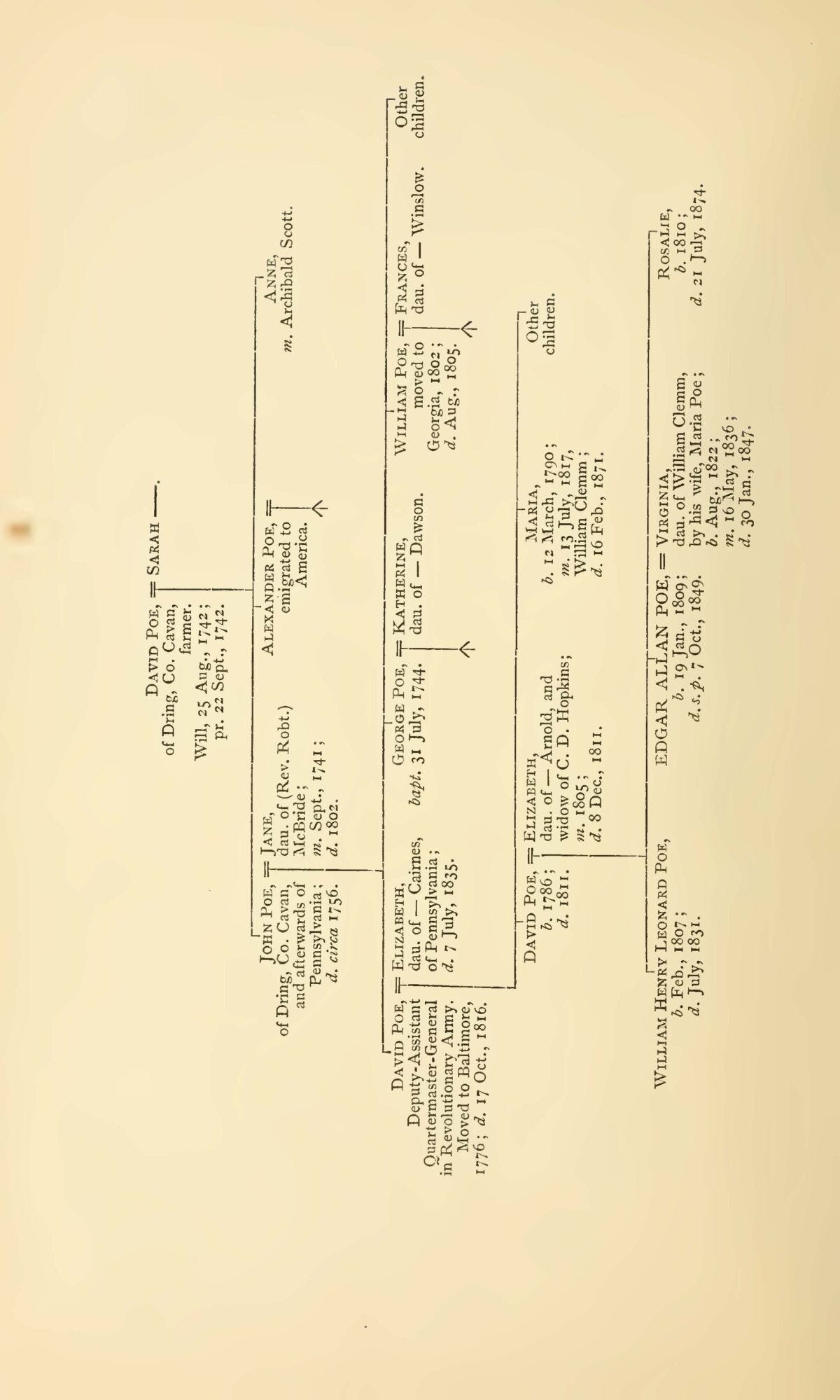
Edgar Allan Poe’s lineage has been traced back to the tiny townland of Dring, Parish of Kildallon, County Cavan, Ireland, to a man named David Poe. He was a tenant farmer, but his ancestry was not Irish; the Poe family is believed to be from the Parish of Fenwick in Ayrshire, Scotland. This would make the Poes Ulster Scots, or Scotch-Irish in common American vernacular.
Covenanters were a religious sect in Scotland that believed that the Stuart kings should not interfere with the affairs of the Presbyterian Church of Scotland. The Stuart kings believed they were not only ordained by God to rule their kingdom, but also the spiritual heads of the Church of Scotland. This was an issue for some Scots, who believed only Jesus could be the church’s spiritual leader. In 1638, they signed the National Covenant, declaring that the Stuart kings did not rule the Church of Scotland. This followed King Charles I’s introduction of the Book of Common Prayer to Scotland in 1637 and his declaration that opposing the new Prayer Book was treason. Ministers who supported or sympathized with the Covenant movement were outed, ostracized, and forced to leave their parishes. Covenant followers were forced to practice and preach their faith in fields, barns, or houses. If you were caught preaching or attending these open-air events, it could lead to treason charges and a death sentence. If one just decided not to participate in Stuart-approved churches, they could be heavily fined and treated like rebels, meaning they could be questioned and tortured. Under the Restoration of Charles II, more common folk became involved in the conflict, and more skirmishes began. In 1678, Charles II hired an army of roughly 6,000 Highlanders, who had no love for the Lowland Scots, to attack and punish the impoverished Covenanters in the west and south of Scotland.
David Poe likely fled Scotland and sought refuge in Ireland as a tenant farmer, like many Covenant Scots fleeing religious persecution. Due to the circumstances in which he and others like him arrived in Ireland, the tradition of elaborate headstones was something that could no longer be maintained unless you were from the wealthier classes. The unmarked graves of common Ulsters would not have been seen as unusual in Ireland, as many Irish graves at the time were unmarked due to the cultural practices of the Irish before British occupation. While the Ulsters would eventually bring over their tradition of complex burial markers, it would not be seen on a wide scale until grave-marker materials became considerably cheaper. By then, the Poe of Baltimore had already emigrated, meaning they likely saw the lack of grave markers as a family tradition as Covenant Scots.
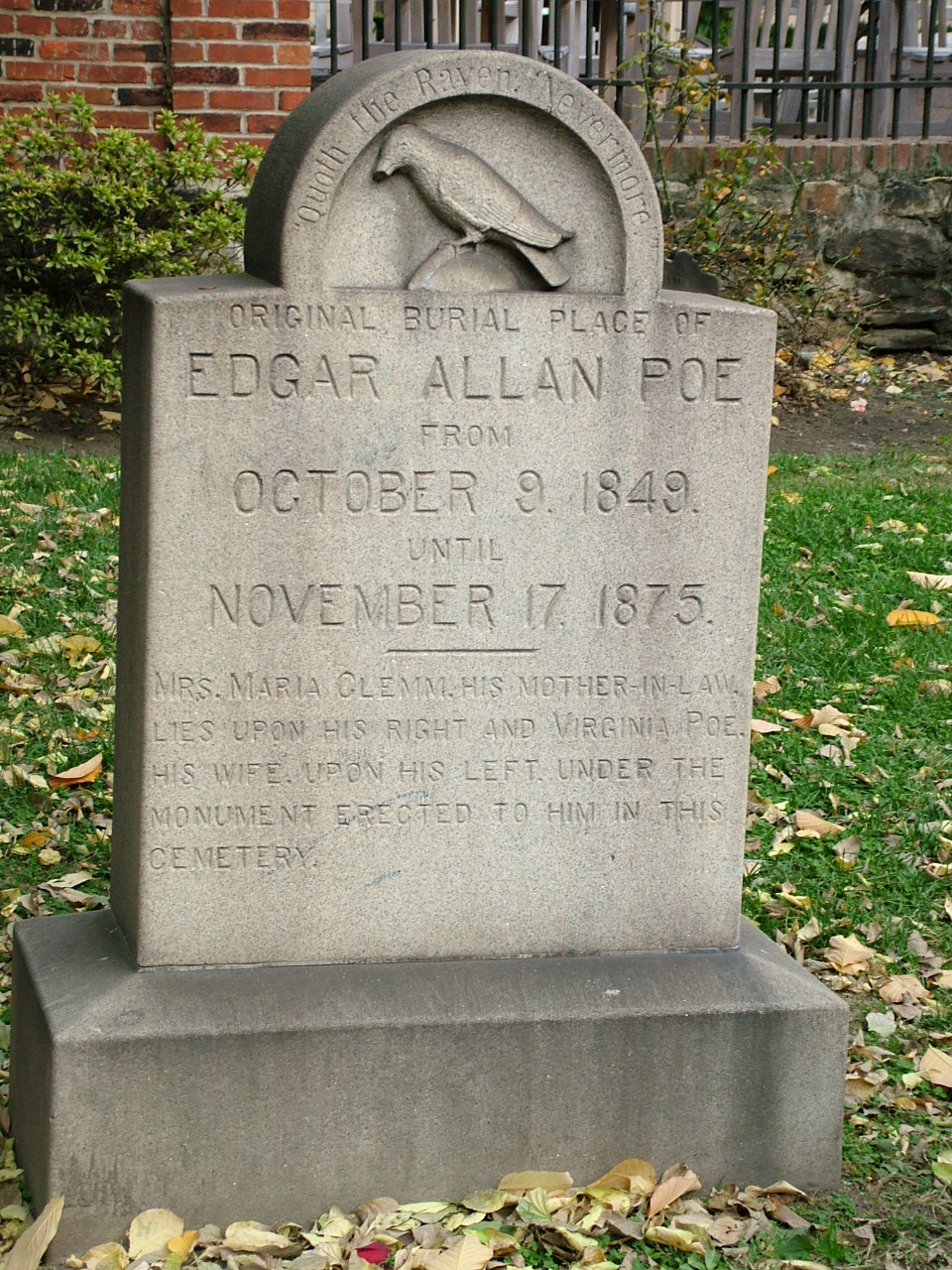
When Edgar Allan Poe was placed with his family in Westminster Hall, none of the other Poe family members had a headstone, including his grandfather, David Poe, Sr, who purchased the family burial ground. Also buried with Edgar Allan Poe were his grandmother and his older brother, William Henry Leonard Poe, none of whom is believed to have had headstones originally. A headstone stands next to the Poe burial plot, but it is not owned by a Poe; it is a marble slab dedicated to Rev. Allison. A vault is owned by a William Buchanan, but the individual marked on it was Joseph Pearson.
We know that at the time of David Poe, Sr.’s death, he was in a considerable amount of debt because of his role in the American Revolution. David Poe had loaned the American forces about $40,000 of his own money as assistant Deputy Quartermaster General for Baltimore, Maryland. His family was left in such a poor financial state that the Marque de Lafayette heard about the poverty-stricken situation David Poe Sr.’s widow faced; he expressed great distress that the government could treat Poe and his family thus. Either at Lafayette’s prompting or during the state’s review of wartime debts, Maryland learned of David Poe’s widow’s situation; the Maryland legislature gave her spousal support. This would explain why David Poe Sr. was buried without a headstone, but as the family regained and rebuilt their wealth and prosperity, why didn’t they later provide a headstone for an ancestor they would be proud of? Unless not having a headstone was a tradition that ran deeper than the money problems of the late 1700s-early 1800s.
Edgar Allan Poe died in 1849, just as headstones were becoming more widely affordable—steam-powered quarrying and cutting, and later electric tools, gradually drove down the cost of stone memorials over the following decades. As prices became more manageable, complex grave markers grew increasingly fashionable in American cities. A member of the Poe family, Neilson Poe, had a headstone marker made for Edgar Allan Poe in 1860. However, a train derailment broke the memorial before it could be placed. Neilson Poe likely decided to mark Edgar Allan Poe’s grave after the family came under great scrutiny for the lack of a marker, which American fans expected. If this was not the family’s practice, then adding the gravestone was more about what the culture expected when gravestones were cheaper and easier to come by. It would also explain why Neilson did not try to have a headstone or marker placed on David Poe, Sr., despite his work and contribution to the American Revolution.
Attributing Edgar Allan Poe’s lack of a grave marker solely to a lack of wealth flattens the entire legacy Poe inherited. The Poe family’s history of religious persecution, rebellion, and a tradition of strong principles spans generations. If anything, Edgar Allan Poe’s lack of a gravestone directly connects to his paternal family’s historical narrative.
Celebrate Poe’s Death Day at the Poe Museum on October 7th, 2026 with a special focus tour, crafts, and a reading contest of “The Raven.”
Sources:
2.6.1 The Material and Accessibility of Existing Information | The Scottish Archaeological Research Framework. https://scarf.scot/thematic/future-thinking-on-carved-stones-in-scotland/2-current-state-of-knowledge/2-6-gravestones/2-6-1-the-material-and-accessibility-of-existing-information/. Accessed 24 Aug. 2026.
A Monument to the Memory of Edgar Allan Poe Historical Marker. https://www.hmdb.org/m.asp?m=6627. Accessed 10 Aug. 2026.
“American Gravestone Evolution – Part 2.” Atlas Preservation, https://atlaspreservation.com/pages/american-gravestone-evolution-part-2. Accessed 24 Aug. 2026.
Among Family: Poe’s Original Burial Place. http://www.nextexithistory.us/explore/historical-sites/among-family-poes-original-burial-place/. Accessed 24 Aug. 2026.
David Poe Sr. (1743-1816) – Find a Grave Memorial. https://www.findagrave.com/memorial/8488667/david-poe. Accessed 24 Aug. 2026.
Deetz, James. In Small Things Forgotten : [An Archaeology of Early American Life]. With Internet Archive, New York : Anchor Books, 1996. Internet Archive, http://archive.org/details/insmallthingsfor0000deet.
Edgar Allan Poe Society of Baltimore – Articles – Edgar Allan Poe: The Man (M. E. Phillips, 1926) (Section 01). https://www.eapoe.org/papers/misc1921/mep1ch01.htm. Accessed 24 Aug. 2026.
Edgar Allan Poe Society of Baltimore – Baltimore – Poe’s Memorial Grave – Original Burial Place. https://www.eapoe.org/balt/poegravd.htm. Accessed 24 Aug. 2026.
Edgar Allan Poe Society of Baltimore – Bookshelf – Edgar Allan Poe the Man (Phillips, 1926) – Title and Contents. https://www.eapoe.org/papers/misc1921/mep10000.htm. Accessed 24 Aug. 2026.
Gravestones & Memorials – National Committee on Carved Stones in Scotland. https://www.carvedstones.scot/gravestones-memorials-html/. Accessed 24 Aug. 2026.
Hopkins, Johns. “Westminster Burying Ground.” Explore Baltimore Heritage, https://explore.baltimoreheritage.org/items/show/25. Accessed 24 Aug. 2026.
In Small Things Forgotten : [An Archaeology of Early American Life] : Deetz, James : Free Download, Borrow, and Streaming : Internet Archive. https://archive.org/details/insmallthingsfor0000deet/page/n9/mode/1up. Accessed 24 Aug. 2026.
Poe Museum’s Object of the Month Angered Poe’s Father – The Poe Museum. https://poemuseum.org/poe-museums-object-of-the-month-angered-poes-father/. Accessed 24 Aug. 2026.
The (Still) Mysterious Death of Edgar Allan Poe. https://www.smithsonianmag.com/history/still-mysterious-death-edgar-allan-poe-180952936/. Accessed 24 Aug. 2026.
Who Were the Covenanters? https://www.covenanter.org.uk/whowere.html. Accessed 24 Aug. 2026.