Written by Nicole Coppino
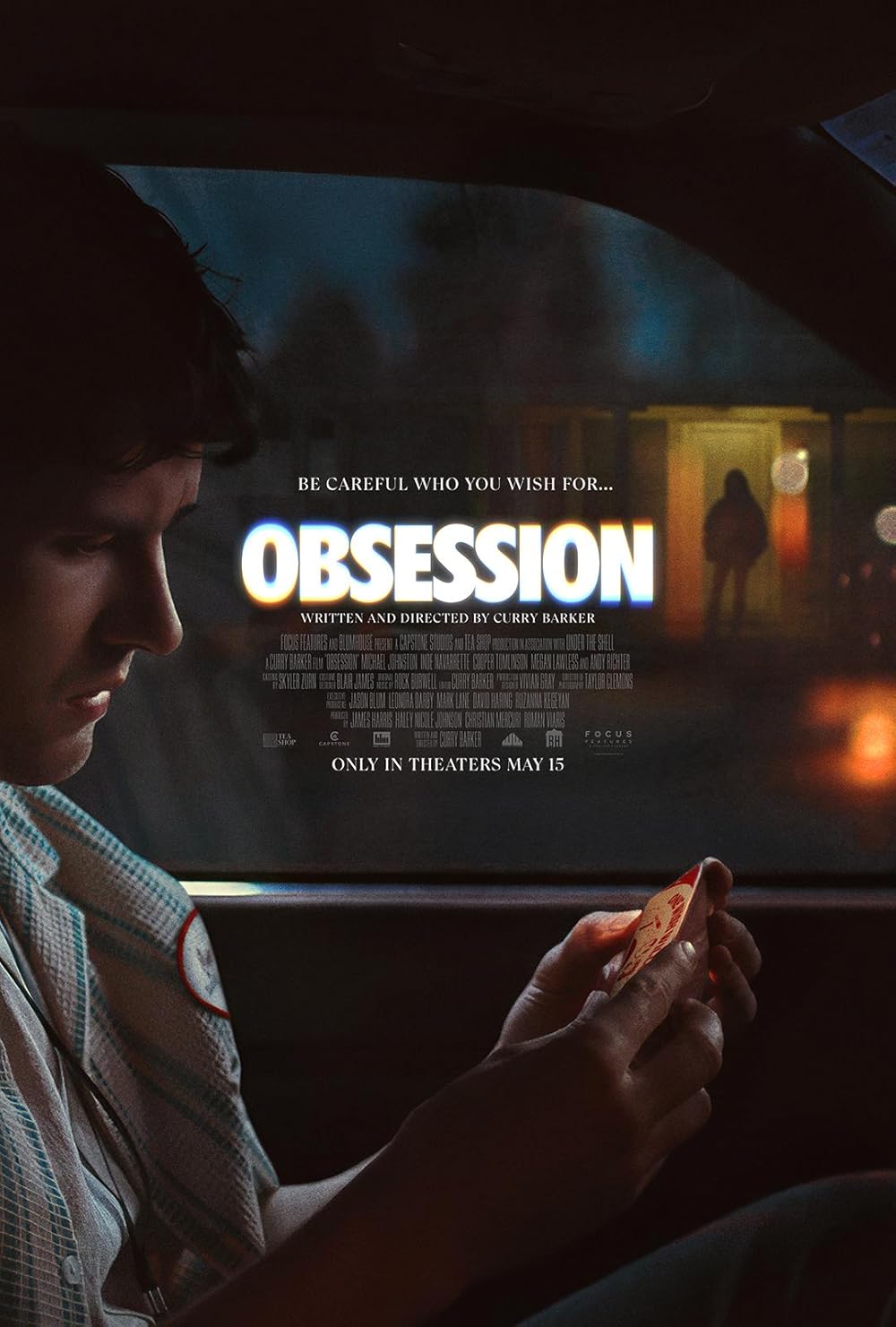
Be careful what you wish for seems to be an age old adage, a trope presented in so many different forms of media that it has become cliche. Obsession (2026) offers a fresh take on this idea, wherein the shy, hopeless romantic Bear makes a wish on a magic-store bought oddity, the One Wish Willow, for his friend and longtime crush Nikki to “love [him] more than anything else in the world.”
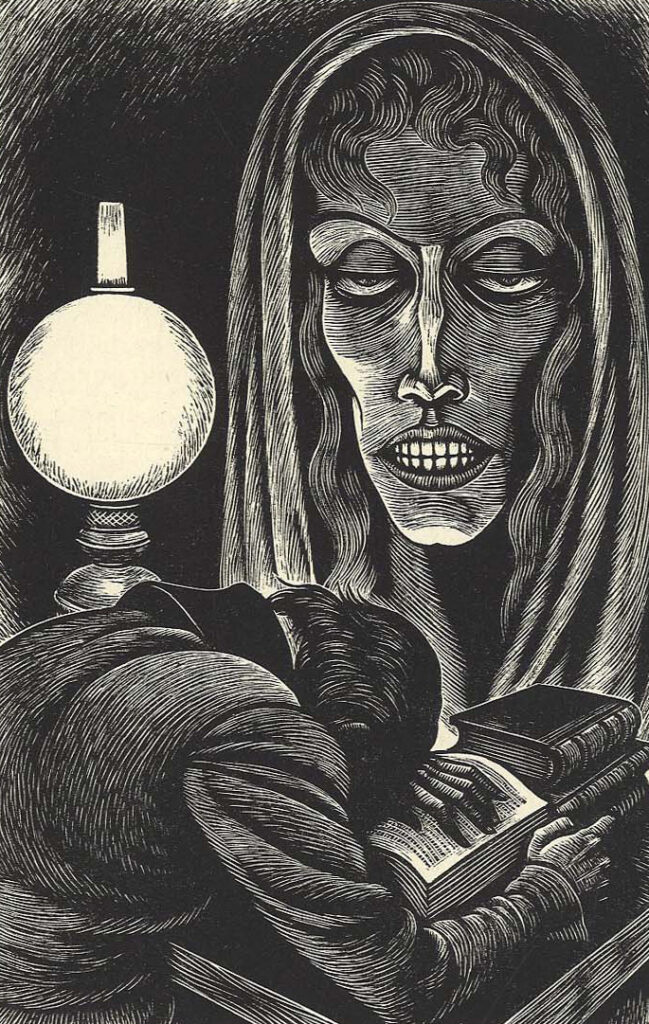
The idea of obsession is a classic trope in gothic fiction and media, especially obsession displayed by male characters over women. Take Edgar Allan Poe’s 1835 short story “Berenice” as an example. Narrator Egaeus uses the phrase monomania to describe the intense fixation he forms over his betrothed cousin Berenice’s teeth. Collins Dictionary defines monomania as “a mental disorder characterized by irrational preoccupation with one subject;” obsession is the first synonym listed.While Egaeus notes that his cousin possesses “gorgeous yet fantastic beauty,” he also insists that he has never loved her romantically. He even goes as far as to admit that he “had seen her — not as the living and breathing Berenice, but as the Berenice of a dream — not as a being of the earth — earthly — but as the abstraction of such a being…” This passage reveals how Egaeus’ monomania over his cousin necessarily dehumanizes her, reducing her to an object of fixation, an abstraction which exists only in his mind, rather than a living, breathing human being. In Obsession (2026), Bear wishes for a version of Nikki who loves him more than anything, a version that henceforth only existed in his mind. His actions in making the wish show that he chose this made-up version of Nikki over the real person, who had her own private thoughts, feelings and the autonomy to choose her own outcomes. When one projects their fantasies onto another, they invent a version of that person that does not exist in reality. They reduce a complex being into an abstract thought. In both “Berenice” and Obsession, this process of abstraction results in a woman’s loss of autonomy when a man forces his desired reality into existence.
One of the most classic stories about wish-making gone wrong is the 1902 short story, “The Monkey’s Paw” by W.W. Jacobs. In this story, Mr. White’s retired friend, Sergeant-Major Morris visits him, his wife, and his son for dinner. While regaling in stories about Morris’ time spent in India, the topic of a monkey’s paw is mentioned. Despite the Whites’ keen interest in the subject, we clearly see Morris’ trepidation in regards to the talisman, which he explains, “had a spell put on it by an old fakir…[who] wanted to show that fate ruled people’s lives, and that those who interfered with it did so to their sorrow…”
Morris then goes on to explain that for anyone who has the paw, three wishes are granted. He tries to destroy the paw right then and there by pitching it into the fire, but Mr. White recovers it and insists on having it, to which Morris reluctantly agrees: so long as White does not fault him for the consequences. We sense the Whites’ desire to laugh the whole thing off – but also their hopefulness that their wishes might be granted, demonstrated by Mr. White’s hasty rescue of the paw from the fire. In each story, the functional purpose of the magical item is almost identical: these objects make wishes come true, but ultimately lead to the doom of the wish-maker and/or those close to them.
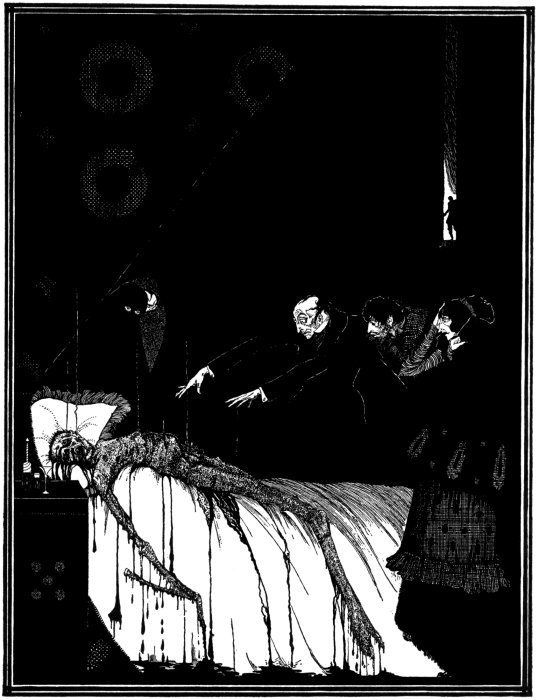
Of course, we also see examples of this trope – consequences of interfering with fate – in Poe’s work. This is likely not a coincidence, as Jacobs was probably inspired by Poe’s writings (Poe died in 1849 and Jacobs was born in 1863). In “The Case of M. Valdemar,” the narrator attempts to prolong the life of his dying friend, M. Valdemar, through mesmerism. He does so by suspending Valdemar in a state of mesmerism right at the moment of his death. Valdemar is preserved in this state of living death, not even breathing. Once the trance is broken, Valdemar instantly dissolves into a puddle of gore and decay. In this story, along with many other Poe stories where the narrator attempts to manipulate life and death (more often in other stories by taking the life of others), he ultimately fails or faces horrifying consequences.
Is this a religious sentiment, not to trifle with the will of God? To the contrary, I would argue that the misfortune in these stories does not come from punishment, but from mere cause and effect. The wishes in these stories are always transactional: they come true, but at a cost. In both stories, the ultimate cost of human life is paid to make the wishes come true. Perhaps the moral here is not a religious one, meant to make us fear and obey God, but rather to not take for granted what we already have in front of us in search for something better.
While gothic fiction is often rife with supernatural elements, the ghosts and ghouls are rarely what gets under our skin and stays there. What truly scares us is the reality that our actions have consequences, sometimes detrimentally irreversible consequences. As much as we wish we could control fate, we can never do so without changing the course of reality…
This is not to say that we should act as though we have no autonomy over our own lives or outcomes. In fact, the reason we must be careful is that we do have an effect on the world around us.
One of the most tragic details in “The Monkey’s Paw” is that, before making his wish, Mr. White states, “I don’t know what to wish for…It seems to me I’ve got all I want.” Of course, with his son’s encouragement, he wishes for a mere 200 pounds. The very next day, a man knocks on the Whites door to inform them that their son has perished in a work accident, and that they are to receive 200 pounds in compensation.
Similarly, in Obsession (2026), up until the moment he breaks the One Wish Willow in half to activate his wish, Bear already shares a genuine friendship with Nikki, full of humor and warmth. After he makes the wish, unthinkable horrors ensue.
So, before we go wishing for something to change, we should take a moment to survey what we already have; because, we might already have all we want.
2 replies on “A Monkey’s Paw, a One Wish Willow, and a Little Bit of Poe”
Wow! What an interesting post. Great work!
Very insightful article. The ending is the best!