Written by Kelly White
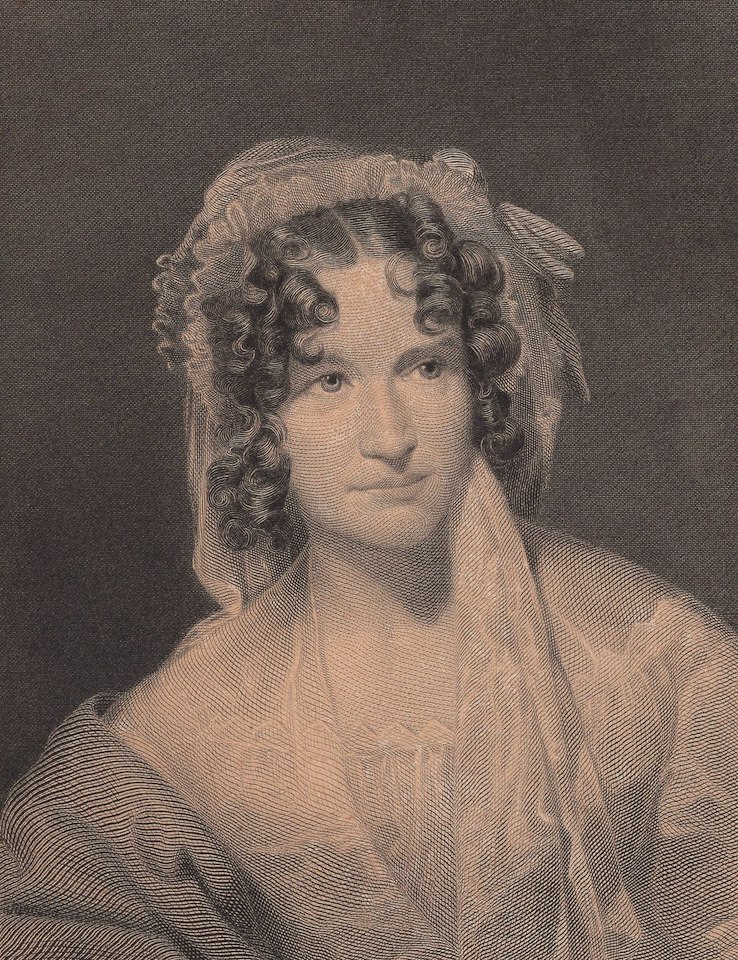
Today, the Poe Museum celebrates the 148th anniversary of Sarah Helen Whitman’s death.
When a book, movie, or museum focuses on one person, people often assume that person is the most interesting part of the story. Yet, many factors influence who is remembered and who is forgotten. Edgar Allan Poe was brilliant and significant in American literature, but he was one of many talented 19th-century minds. Many others have been overlooked due to race, gender, or social status. This particular remembrance reveals how our collective memory and the literary canon are shaped—not just by talent, but also by prevailing social norms and power structures.
One way to combat the erasure of people associated with great authors is through specialized programming. The Poe Museum of Richmond, Virginia offers many specialized tours on the life, work, and people that influenced Edgar Allan Poe. As a part of women’s history month this past March, they offered the Women of Poe Tour, and I was lucky enough to get to experience it.
It is on this tour that I learned about Sarah Helen Whitman, a poet, scholar, and critic with a truly independent mind, ahead of her time. Her story prompts us to think about who gets remembered, how gender and other biases affect legacy, and why widening our understanding of literary history matters. She loved Poe but knew she could not marry a man lacking self-control. Poe proposed repeatedly, and Whitman finally agreed — but only on one condition. She would only agree if he signed a temperance pledge. She promised him, if he broke it, the engagement would end. One month later, Edgar Allan Poe broke his promise and Whitman ended the engagement. She understood love’s limits and the importance of self-preservation.
To better understand her decision, it is important to ask: who was this remarkable woman who chose her own safety, future, and peace of mind over her deep love for the troubled Edgar?
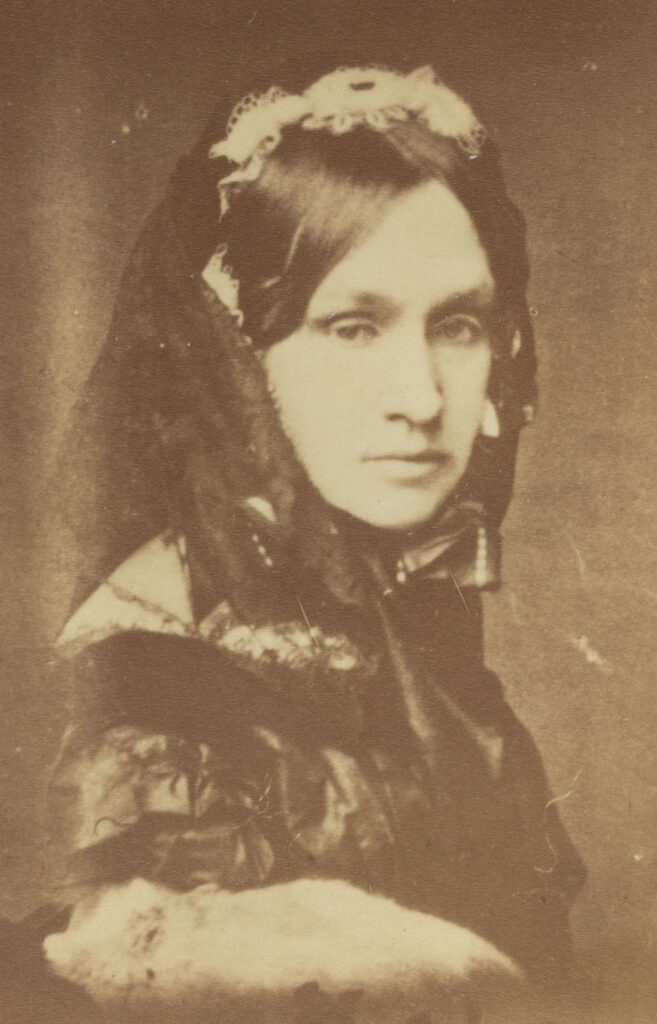
Born Sarah Helen Powers to a prominent Rhode Island family on January 19, 1803, Helen was the second child of Nicholas and Anna Powers. Nicholas Powers, her father, was a merchant and sea captain whose business suffered during the War of 1812. After being captured at sea, Nicholas was forced into service in the British Navy, leading the family to incorrectly assume he had died at sea, which increased their financial difficulties. (Power-Whitman Papers, 1997) As a result, Helen moved in with her aunt, whose name is not recorded, on Long Island. There, she first received an education at a Quaker School. This early exposure to Quaker notions of equality and liberal thought may have influenced Helen’s later activism in the Women’s Suffrage movement and her donations to schools for ‘colored children’(historical term; Tucker, 2023) Helen later returned to continue her studies at a private school near her mother, Anna Powers, and her siblings. Unlike her peers, Helen frequently skipped required classes to pursue independent study in the library or outdoors. She read widely, turning to Shakespeare and modern Gothic novels, and also taught herself Italian, French, and German. (Sarah Helen Whitman, 2024) Acquaintances described Helen as having an agile mind and a firm dedication to self-education across a range of topics (Rhode Island Heritage Hall of Fame or RIHHF). These formative experiences, pairing scholarly curiosity with exposure to progressive ideals, would come to shape Helen’s later work as both a writer and an activist, and deeply inform the special perspective she brought to her essays and poetry.
At age twenty-five, during a trip to Boston, Helen met John Winslow Whitman, a lawyer and writer who encouraged her own writing. They married in 1828. Whitman edited several magazines promoting female authors, regularly featuring Helen’s work and reviews. Despite some flaws—he was once arrested for passing a bad check—he supported her ambitions. She may have learned then that love alone wasn’t enough. In 1833, John suddenly died while visiting family, and Helen learned of his death three days later. She returned to her childhood home to live with her mother (Leland, 2026).
After her husband’s unexpected death, Sarah Helen Whitman turned to the emerging spiritual movement of the time. In an era when death came early and medicine offered little comfort, the movement drew many followers. Helen became a fervent practitioner and would remain one throughout her life, often writing to defend the movement against its detractors (The Poetry Foundation, 2023).

Building on her earlier work, Helen’s writing explored broader topics, including love, death, spiritualism, and women’s suffrage. As a literary critic, “Whitman explicates transcontinental idealism through American perspectives on immortality, pre-Darwinian evolutionary theory, German Naturphilosophen, and the occult in her essays on Emerson, Alcott, Goethe, Shelley, and Poe (Baker 1999).”
Her understanding of science, theology, and spiritualism allowed her to deepen the reader’s grasp of these works. This led her to become friendly with the writers she critiqued such as Shelley (The Poetry Foundation, 2024). Her essays and poetry attracted Edgar Allan Poe to seek out Whitman. Six years his senior, Whitman bonded with Poe over writing, science, and spiritualism. She was considered a beauty well beyond what society deemed a woman’s prime. Poe told friends he had watched her in her garden, spellbound by her otherworldly beauty. In 1848, she sent Poe an unsigned valentine, later published in the New York Home Journal (RIHHOF).
A low bewildering melody
Is murmuring in my ear —
Tones such as in the twilight wood
The aspen thrills to hear
When Faunus slumbers on the hill
And all the entranced boughs are still.
The jasmine twines her snowy stars
Into a fairer wreath —
The lily through my lattice bars
Exhales a sweeter breath —
And, gazing on Night’s starry cope,
I dwell with “Beauty which is Hope”.
Providence R. I. August 1848
Poe was smitten, and their flirtatious correspondence began. Poe proposed multiple times, but Whitman refused, perhaps due to her mother’s advice or her own doubts about Poe’s character. Despite her honest affection and intellectual bond with Poe, Whitman struggled with the emotional turmoil his instability caused her. She admired his brilliance, but his erratic behavior foreshadowed doom for any marriage. She was torn between her feelings and her awareness of the risks a deeper relationship with Poe would bring. Poe, desperate, consumed laudanum in an apparent attempt to manipulate her decision, but survived. Helen did not rush to his side, refusing to be moved by his self-destructive behavior. In her letters and actions, it was clear she cared deeply for Poe but was also determined to protect her own well-being, even at great personal cost (eapoe.org).
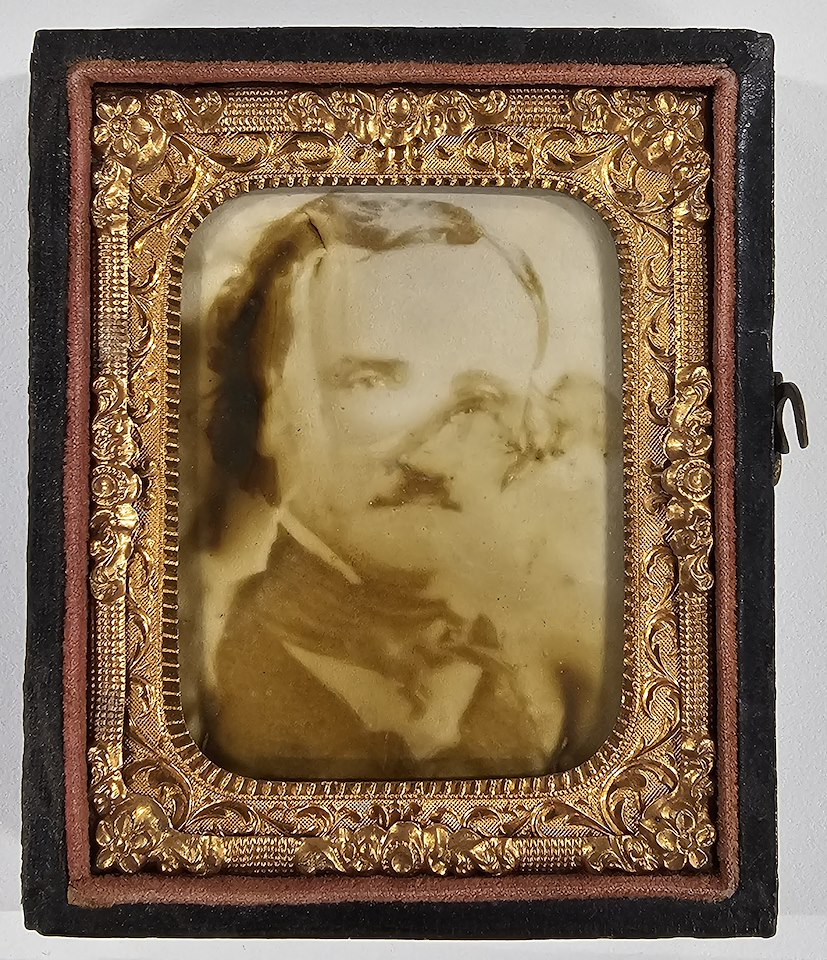
After this troubling episode, and with much convincing, Sarah Helen Whitman agreed to marry Poe under one condition: he must sign a temperance pledge, and if he broke it, their engagement would be broken. One month later, Helen, while very much in love with Poe, ended their engagement as he could not remain temperate (eapoe.org). This was the moment foreshadowed by everything Helen had lived through — her father’s failures, John’s flaws, Poe’s instability. She had learned, more than once, that love without accountability was not enough.
She did not grow to hate Poe, but even after his untimely end, she would be the friend, scholar, and writer who would challenge Rufus Griswold’s slanderous obituary. In a letter to Griswold, Whitman expressed concern that Maria Poe Clemm — Poe’s aunt and former mother-in-law — was being fed biased information that further damaged his reputation. There were even rumors that the unfavorable gossip came from Helen Whitman herself, which she adamantly denied in the letter. Throughout the letter, she stresses that it is incredibly important that Griswold and Mrs. Clemm know that the dissolution of their engagement was not due to a lack of love but Poe’s inability to stay away from drink. She had believed that Poe wanted to give up drinking and all the ill impacts that it had on his life, but it seems that he lacked the ability or courage to stay temperate. It is painfully obvious that she rejected Poe not only to save herself from heartache but also to protect Poe and his name. She wanted to make it clear that she had felt nothing but love and sadness over their inability to marry, pointing out that Poe blamed her mother for the broken engagement, possibly unable to blame his Helen for her justifiable actions.
Helen’s defense of Poe did not stop at personal correspondence. In 1859, ten years after Poe’s death, Whitman published a rebuttal to Griswold’s negative biography. The preface reads in part:
DR. GRISWOLD’s Memoir of Edgar Poe has been extensively read and circulated; its perverted facts and baseless assumptions have been adopted into every subsequent memoir and notice of the poet, and have been translated into many languages. For ten years this great wrong to the dead has passed unchallenged and unrebuked.
It has been assumed by a recent English critic that “Edgar Poe had no friends.” As an index to a more even-handed and intelligible theory of the idiosyncrasies of his life, and as an earnest protest against the spirit of Dr. Griswold’s unjust memoir, these pages are submitted to his more candid readers and critics by
ONE OF HIS FRIENDS.
Whitman did not stop at publishing her defense. She contacted those who knew Poe, asking for their memories and for the reasons behind Griswold’s attacks on Poe’s legacy. She published Edgar Allan Poe And His Critics in 1860 making her one of the earliest and most rigorous defenders of his literary reputation.
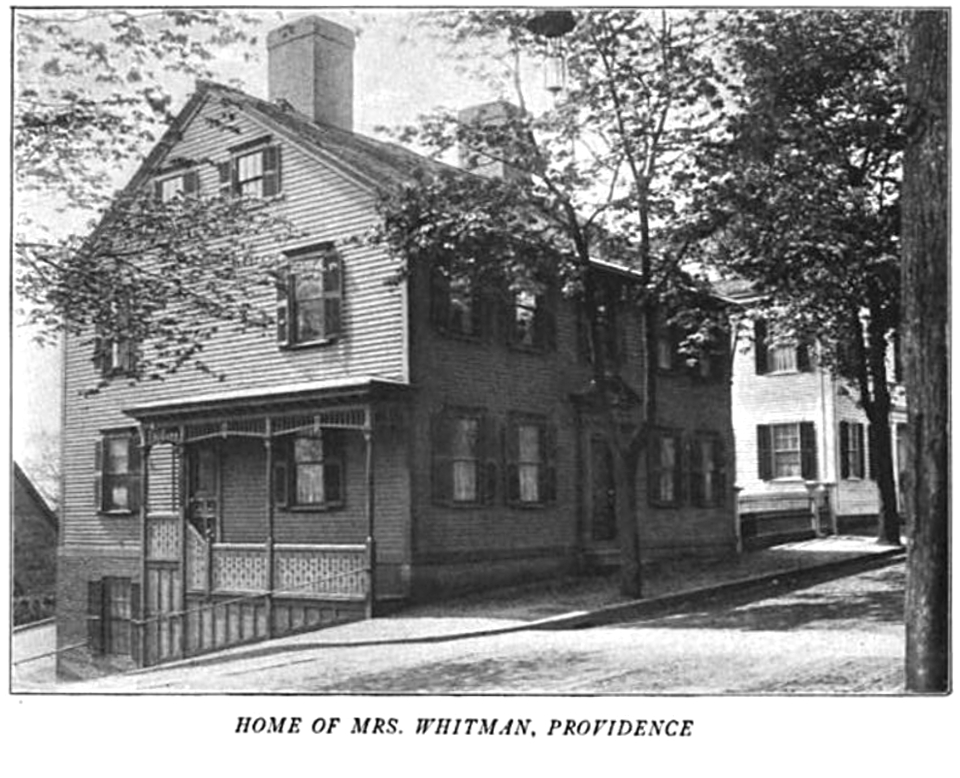
Even as she fought for Poe’s legacy, Sarah Helen Whitman remained steadfast in her convictions. She wrote and published until her death on June 27, 1878, in Providence, Rhode Island. She continued writing, focusing mainly on spiritualism and the occult, and composed poems to her beloved Edgar until the end. She never remarried or had children. After providing for the publication of her final work, she left the rest of her fortune to the Providence Association for the Benefit of Colored Children (RIHHOF).
Whitman was a woman with a great literary mind, a strong will, and a passionate spirit. She turned down a man she loved deeply because she knew the marriage would not work and would be harmful to both of them. Sarah Helen Whitman acknowledged that love was not enough to make a marriage work, or to save a man unwilling to save himself. It did not change how she felt about him, and she came to his defense long after his death, in her final tribute to the man she loved.
Whitman’s story resonates powerfully with present-day conversations about women’s autonomy and the recognition of women’s voices in intellectual spaces. Her willingness to prioritize her own well-being and principles over social expectations parallels continuing struggles for women’s independence in relationships and for fair representation in history and literature. Sarah Helen Whitman and her work deserve to be celebrated on their own terms — not as a footnote in another writer’s story, but as a vital and lasting voice in American literature.
The following is just a sample of Sarah Helen Whitman’s wonderful poetry:
Arcturus
Written in October
“Our star looks through the storm.”
Star of resplendent front! thy glorious eye
Shines on me still from out yon clouded sky—
Shines on me through the horrors of a night
More drear than ever fell o’er day so bright
Shines till the envious Serpent slinks away
And pales and trembles at thy steadfast ray.
Hast thou not stooped from heaven, fair star! to be
So near me in this hour of agony?—
So near—so bright—so glorious, that I seem
To lie entranced as in some wondrous dream—
All earthly joys forgot—all earthly fear
Purged in the light of thy resplendent sphere:
Gazing upon thee, till thy flaming eye
Dilates and kindles through the stormy sky;
While, in its depths withdrawn—far, far away—
I see the dawn of a diviner day.
(1849)
Citations:
Edgar Allan Poe Society of Baltimore – Bookshelf – Death of Edgar A. Poe (R. W. Griswold, 1849). https://www.eapoe.org/papers/misc1827/nyt49100.htm. Accessed 20 Apr. 2026.
Edgar Allan Poe Society of Baltimore – Bookshelf – Edgar Poe and His Critics (S. H. Whitman, 1860). https://www.eapoe.org/papers/misc1851/18600000.htm. Accessed 20 Apr. 2026.
Edgar Allan Poe Society of Baltimore – Bookshelf – The Portraits and Daguerreotypes of Edgar Allan Poe (1989) – Introduction. https://www.eapoe.org/papers/misc1921/deas00ia.htm#dags. Accessed 18 Apr. 2026.
Edgar Allan Poe Society of Baltimore – Bookshelf – The Portraits and Daguerreotypes of Edgar Allan Poe (1989) – Introduction. https://www.eapoe.org/papers/misc1921/deas00ia.htm#dags. Accessed 20 Apr. 2026.
RIAMCO | Rhode Island Archival and Manuscript Collections Online. https://www.riamco.org/render?eadid=US-RPB-ms79.11&view=all. Accessed 10 Apr. 2026.
“*Sarah Helen Power Whitman.” Edgar Allan Poe: Rhode Island, 5 Sept. 2018, https://edgarallanpoeri.com/sarah-helen-whitman/.
Sarah Helen (Power) Whitman – Rhode Island Heritage Hall of Fame. https://riheritagehalloffame.com/sarah-whitman/. Accessed 10 Apr. 2026.
“Sarah Helen Whitman.” The Poetry Foundation, https://www.poetryfoundation.org/poets/sarah-helen-whitman. Accessed 10 Apr. 2026.
“Sarah Helen Whitman | Biography | Research Starters | EBSCO Research.” EBSCO, https://www.ebsco.com. Accessed 10 Apr. 2026.
Sarah Helen Whitman | Biography, Books, & Facts | Britannica. 2 Apr. 2026, https://www.britannica.com/biography/Sarah-Helen-Power-Whitman.
Sarah Helen Whitman | Biography, Books, & Facts | Britannica. https://www.britannica.com/topic/Hours-of-Life-and-Other-Poems. Accessed 15 Apr. 2026.
Sarah Helen Whitman as Poet and Critic. https://www.academia.edu/38287046/Sarah_Helen_Whitman_as_Poet_and_Critic. Accessed 15 Apr. 2026.
“Sarah Helen Whitman’s House.” Helen Anthony, https://www.helenanthony.com/bright-lights/sarah-helen-whitmans-house. Accessed 10 Apr. 2026.
Vincent, H. P. “A Sarah Helen Whitman Letter about Edgar Allan Poe.” American Literature, vol. 13, no. 2, 1941, pp. 162–67.
———. “A Sarah Helen Whitman Letter about Edgar Allan Poe.” American Literature, vol. 13, no. 2, 1941, pp. 162–67.
Walton, Geri. “Spiritualism: A Religious Movement of the 1800s.” Geriwalton.Com, 5 July 2021, https://www.geriwalton.com/spiritualism-a-religious-movement-of-the-1800s/.
Writer to Writer, Woman to Woman: The Correspondence of Sarah Helen Whitman and Julia Deane Freeman – ProQuest. https://www.proquest.com/openview/abc0f8ea6e6bb26bb8ebeb32a2be2872/1?pq-origsite=gscholar&cbl=18750&diss=y. Accessed 10 Apr. 2026.